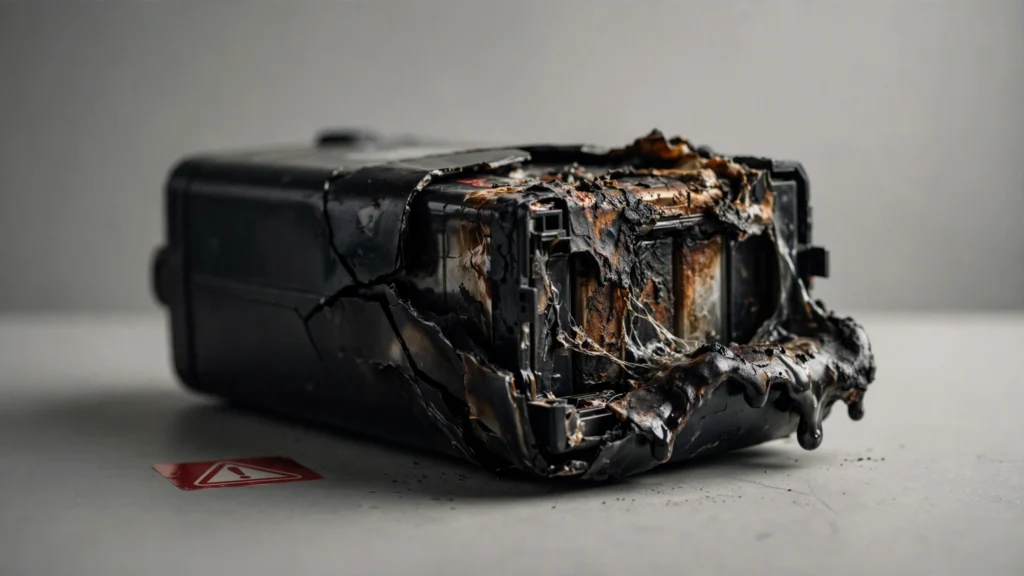
You bought a product in good faith, it failed, and now you are hurt. A lithium-ion battery that overheated in your pocket. A hip implant that shed metal into your bloodstream. A pressure cooker whose lid blew off. Whatever it was, you are left with the same pressing question: what is the average settlement for defective product injury lawsuit cases, and what might yours be worth?
The short answer: there is no single number, and anyone who gives you one without knowing your injuries is guessing. The honest answer is a set of ranges — and those ranges are wide, running from tens of thousands of dollars for minor injuries to millions for catastrophic ones. This guide gives you the real numbers behind defective product settlements, the reasons one case pays ten times what another does, and the concrete steps you should take this week to protect the value of your claim.
The Straight Answer: What Is the Average Settlement for Defective Product Injury Lawsuit Cases?
Let us start with the most honest statement in this guide: nobody publishes the true average settlement for defective product injury lawsuit cases, because almost all settlements are confidential. No government agency collects settlement figures. Jury verdicts are public, but the overwhelming majority of cases settle before trial — and the amounts are sealed by confidentiality clauses. Any website quoting a precise “average” to three decimal places is dressing up a guess.
That said, there is real public data that brackets the picture, and it is worth knowing:
- Jury verdict data: Jury Verdict Research data published by the Insurance Information Institute shows the median personal injury jury award across all case types at roughly $100,000 (2014–2020), with a mean of about $1.48 million and the middle half of awards clustering between $20,000 and $505,000. These are verdicts, not settlements — and product liability is consistently one of the highest-award categories within that data. The same research has pegged the median product liability jury award alone at around $3.9 million in 2020.
- Mass-tort settlement tiers are public by necessity: when thousands of people are injured by the same product, settlement structures are disclosed in court filings. In the Roundup weedkiller litigation, a proposed $7.25 billion settlement called for average per-person payouts of roughly $10,000 to $165,000 depending on exposure, age, and illness severity — far below the billion-dollar individual jury verdicts the same cases produced at trial.
- Individual reported cases run the full spectrum: the famous hot-coffee burn case against McDonald’s ended in a $2.86 million verdict (later reduced to $640,000) for third-degree burns over six per cent of the victim’s skin, while routine product injury cases settle for five or six figures.
The practical takeaway: think in ranges by injury severity, not in averages. Your medical bills, the permanence of your injury, and whether the product was recalled are far more predictive than any national mean.
Average Defective Product Settlement by Injury Type
The table below sets out the settlement and verdict ranges that commonly show up in reported defective product cases, organised by injury category. Read the “what moves it” column — the same injury can sit at the bottom or the top of the range depending on those factors.
| Injury category | Typical reported range | What pushes the number up or down |
|---|---|---|
| First-degree burns, cuts, lacerations, minor soft-tissue injuries (blistering from an overheating device, a cut from a faulty latch) | $10,000 – $75,000 | Heals fully with no scarring → lower end; visible scarring or infection complications → upper end. |
| Second-degree burns (deep blistering, often from batteries, pressure cookers, or appliances) | $75,000 – $500,000 | Burn injury settlements reported by injury lawyers commonly span $20,000 to over $2,000,000 — percentage of body affected, scarring, and lost work time drive placement within the band. |
| Third-degree / severe burns (grafting, permanent disfigurement, disability) | $500,000 – $2,000,000+ | Permanent disfigurement and loss of function. The McDonald’s coffee verdict ($2.86 million for third-degree burns, later reduced) shows how juries value even small areas of deep burns. |
| Orthopedic injuries (fractures from collapsing products, tip-over furniture, exploding pressure vessels) | $100,000 – $1,000,000 | Surgery and hardware push cases up; fractures that heal cleanly without surgery settle lower. |
| Traumatic brain injuries (falls from defective ladders, e-bikes, children’s products) | $250,000 – $2,000,000+ | Objective findings (imaging, neuropsychological testing) and permanence matter enormously; disputed “mild” TBIs settle far lower than cases with documented impairment. |
| Amputation / loss of limb (industrial and consumer equipment) | $750,000 – $3,000,000+ | Prosthetics, lifelong care, and lost earning capacity make these among the highest-value injury claims. |
| Respiratory illness or cancer from a defective product (herbicides, talc, implants, contaminated devices) | $10,000 – $165,000 per claimant in mass-tort settlements; individual trial verdicts far higher | In mass torts, payouts are tiered by diagnosis severity and exposure. The proposed Roundup settlement averages roughly $10,000–$165,000 per person — while individual Roundup jury verdicts have reached into the billions before appeal reductions. |
| Wrongful death | $1,000,000 – $5,000,000+ | Older Bureau of Justice Statistics data put the median product liability wrongful death verdict near $2 million. Age, earning capacity, dependents, and punitive damages swing the range widely. |
Three things to notice about this table. First, every range overlaps the next, because severity is a continuum. Second, these are gross figures — your lawyer’s fee, case costs, and medical liens come out of the settlement before you see a check, which is why our guide on how lawsuit settlements are paid out is worth reading before you agree to any number. Third, none of these are promises: a recalled product, a sympathetic jury, and clean medical records can all push a case past its band — and weak causation evidence can sink even a severe-injury claim.
Who You Can Sue: The Liability Chain
One reason defective product cases can pay well is that you are rarely limited to a single defendant. Under product liability law, the entire commercial chain that put the product in your hands can be held responsible — and in most states, that liability is strict, meaning you do not have to prove anyone was careless. Here is who sits in the chain and what each party typically brings to your case:
| Party | Their role | What they typically bring to your case |
|---|---|---|
| Manufacturer | Designed and built the product (or the defective component) | The primary defendant and usually the deepest pocket — carries product liability insurance and faces strict liability for design, manufacturing, and warning defects. |
| Component maker | Supplied the faulty part — the battery cell, valve, sensor, or implant material | Often the true technical culprit in failure cases; may be sued alongside or instead of the final assembler. |
| Distributor / wholesaler | Moved the product down the supply chain | Strictly liable in most states too — another insured pocket, and often easier to serve than an overseas manufacturer. |
| Retailer | Sold it to you (brick-and-mortar or online) | Strictly liable in most states; sometimes the only defendant with a US address. A few states offer limited exemptions for retailers who merely passed along a sealed product. |
| Importer | Brought a foreign-made product into the US market | Effectively stands in for an overseas manufacturer you could never realistically sue abroad. |
| Brand / marketing company | Put its name on someone else’s product, or sold it under private label | Liability for marketing defects — misleading claims and inadequate warnings — even if they never touched the assembly line. |
Why does this matter for your settlement? Because every additional solvent defendant is another insurance policy at the table. A lawsuit naming only a small online seller looks very different from one naming the manufacturer, the battery supplier, and the retailer — and experienced product liability lawyers name the full chain deliberately. This is also why suing “someone in China who sells on a marketplace” rarely goes anywhere alone: the importer and the platform seller within US jurisdiction are what make the case collectable.
Strict Liability in Plain English: You Don’t Have to Prove Negligence
In an ordinary injury case — a car crash, a slip and fall — you must prove someone was negligent: that they acted unreasonably and that caused your harm. Defective product cases work differently. In almost every US state, strict liability applies: if the product was defective and the defect caused your injury, the companies in the chain are liable even if they did everything “reasonably.”
You do need to establish three things, and the law recognises three kinds of defect:
The three kinds of product defects
- Design defect: the whole product line is unsafe by design — every unit made to this blueprint carries the risk. A pressure cooker whose lid can open under pressure, or an e-bike battery pack with no thermal cutoff, are classic examples. Lawyers often show a safer alternative design was feasible and affordable.
- Manufacturing defect: the design was fine, but your particular unit was built wrong — a cracked weld, contaminated medication, a missing bolt. These cases usually come down to factory records and the failed part itself.
- Marketing defect (failure to warn): the product was dangerous in a way users could not foresee, and the warnings or instructions did not say so — or buried it in unreadable fine print. Many drug, chemical, and children’s-product cases turn entirely on warnings.
What you still have to prove
Strict liability removes the need to prove carelessness, but it does not remove the need to prove causation: that the defect actually caused your injury, and that you were using the product in a reasonably foreseeable way. The defense’s two favourite counterattacks are (1) misuse — you used the product in a way nobody could foresee — and (2) alternative cause — your injury came from something else. This is why the failed product itself, preserved untouched, is the single most valuable piece of evidence in your defective product injury lawsuit. More on that in the checklist below.
What Moves Your Settlement Up or Down
With the legal framework in place, here are the real-world factors that determine where in those ranges your case lands:
Injury severity and permanence
The dominant factor, full stop. Permanent injuries — disfigurement, amputation, brain damage, chronic illness — command the highest numbers because they generate the largest economic damages (lifelong medical care, lost earning capacity) and the largest non-economic damages. Our guide on how pain and suffering is calculated walks through the multiplier and per-diem methods that convert your suffering into dollars — severe, well-documented injuries earn multipliers of 4 to 5 times medical bills, while minor temporary injuries earn 1.5 to 2.
How clear the defect is
A product that has already been recalled is a gift to your case — the manufacturer has effectively admitted the hazard in writing. Government recall notices, prior incident reports, and internal company documents (which your lawyer can obtain in discovery) turn a disputed defect into an acknowledged one. Cases with a clear defect settle faster and higher; cases where the defect itself is debatable become expensive expert battles.
The defendant’s ability to pay
A brilliant defective product injury lawsuit against a defunct company with no insurance is worth little. Large manufacturers carry substantial product liability insurance — the Insurance Information Institute notes that product liability defense costs alone run to hundreds of millions annually — and cases against well-insured defendants settle for meaningfully more. This is another reason the liability chain matters: more defendants means more coverage.
Your state’s rules
Product liability is state law, and states differ sharply. Some cap punitive damages or non-economic damages; some apply strict liability more broadly than others; a few still use older negligence-based frameworks for certain claims. Your state’s statute of limitations also matters — most product liability deadlines run two to three years from the injury, and some states add a statute of repose that bars claims against products older than a set number of years, no matter when the injury happened.
Your own conduct and evidence
Modified or misused the product? Threw it away? Posted about the incident on social media? Each of these gives the defense ammunition. Conversely, victims who preserve the product, follow their doctors’ orders, document everything, and stay off social media present the cleanest cases — and adjusters pay a premium for cases that look trial-ready.
Mass Tort vs. Individual Case: Set Your Expectations Honestly
If your injury came from a product that hurt thousands of people — a drug, a medical implant, an herbicide — your case will probably be handled very differently from a one-off defective appliance case. Understanding the distinction now will save you from bitter disappointment later.
Individual cases: yours alone
A single-plaintiff defective product injury lawsuit is fully yours: your lawyer, your evidence, your settlement negotiation. Per-person payouts are typically higher because nothing is diluted across a claimant pool — but you bear the full cost and risk of proving the defect, which usually means engineering or medical experts and a longer timeline. For a detailed picture of what that timeline looks like phase by phase, see our guide on how long a personal injury lawsuit takes.
Mass torts (MDLs): strength in numbers, diluted payouts
When thousands of people are injured by the same product, federal cases are consolidated into a multidistrict litigation (MDL) — one court, one judge, shared discovery — while each plaintiff keeps their own case and their own lawyer. This is efficient: the defect evidence is built once, not ten thousand times. But when the MDL settles globally, the fund is split across the entire claimant pool, often through tiers based on injury severity.
The numbers tell the honest story. The 3M Combat Arms earplug litigation — the largest mass tort in US history — settled for $6 billion across hundreds of thousands of claims, while early individual jury verdicts in that same litigation ran from $8 million to $78 million per plaintiff. In the Roundup litigation, the proposed global settlement would average roughly $10,000 to $165,000 per person by tier, while a Georgia jury in 2025 awarded a single plaintiff $2.065 billion before appeal reductions.
Mass torts trade individual payout size for collective efficiency. If your injuries are unusually severe within the pool, the top tier — or opting out of the settlement to try your case individually — can be worth discussing with your lawyer.
One more caution: mass-tort advertising is relentless, and signing with the first firm whose commercial you saw is rarely optimal. The firms that built the defect evidence in an MDL often have leverage that latecomer firms do not. A free consultation with a firm already on the MDL’s leadership or plaintiff steering committee is worth your time.
What to Do This Week: Your Evidence Preservation Checklist
Everything in this guide about settlement value assumes one thing: you can prove what happened. Do these things now, this week, in this order:
- Keep the product. Do not throw it away, repair it, return it, or alter it. Put it in a bag or box, handle it as little as possible, and store it somewhere safe. This is the single most important step — the failed product is the star witness in your case, and its absence can kill a claim outright.
- Keep everything that came with it: the packaging, manual, warranty card, receipt, and any labels showing the model number, serial number, lot number, and manufacturing date. Photograph all of it.
- Photograph your injuries and the scene — the product as it failed, where it happened, and your injuries over time as they heal. Dated photos beat memory in every negotiation.
- Get medical treatment and keep every record. Gaps in treatment are the most common reason settlement numbers collapse — the defense will argue that a three-month gap means you were not really hurt. Follow your doctors’ orders and make sure every symptom is in the written record.
- Check for recalls. Look up your product on the CPSC’s recall search — safety recalls never expire, and a recall notice for your exact product is powerful evidence. If it is a medical device, check the FDA’s device reporting page: the agency receives over two million medical device reports a year, and your report — filed through the FDA’s Medical Device Reporting (MDR) / MedWatch system — helps regulators spot patterns and becomes part of the public record.
- Write down what happened while it is fresh: the date, time, what you were doing, how the product failed, who witnessed it, and what you did immediately after. Contemporaneous notes are far more credible than reconstructed memories a year later.
- Do not post about it on social media. A photo of you looking fine at a barbecue can surface in discovery and cost you hundreds of thousands of dollars. Assume the defense is watching — because in serious cases, they are.
- Talk to a product liability lawyer early — and do not sign anything from the manufacturer or their insurer first. Early legal guidance protects the statute of limitations, and most product liability lawyers work on contingency: you pay nothing upfront, and the lawyer is paid a percentage of what you recover. Our breakdown of how contingency fees work shows the typical 33–40% structure so you know exactly what to expect.
How Long Do Defective Product Cases Take — and What Do They Cost?
Product liability cases run longer than the average personal injury case. The defect itself must be investigated, which usually means your lawyer hires engineering or medical experts, obtains the manufacturer’s design and testing documents in discovery, and sometimes tests the failed product. A straightforward defective product injury lawsuit that settles before trial commonly takes one to two years; cases that go through full litigation or an MDL can take three to five years.
On cost: the good news is that you should not need savings to pursue a strong claim. Most product liability attorneys take cases on contingency — no upfront fee, paid only from your recovery — and they advance the case costs (experts, testing, filing fees), which in product cases can run into the tens of thousands.
Read our guide on how much it costs to sue for personal injury for the full breakdown of what a gross settlement number becomes by the time the check reaches you. The honest math: on a $500,000 settlement at a 40% fee with $40,000 in advanced costs and $60,000 in medical liens, your net check is around $200,000 — which is precisely why understanding the fee agreement before you sign matters as much as the settlement figure itself.
Key Takeaway
There is no reliable single average settlement for defective product injury lawsuit cases — but there are honest ranges, and they run from tens of thousands for minor injuries to millions for catastrophic ones. Where your case lands depends on injury severity and permanence, how clearly defective the product was (a recall is your strongest card), how many solvent defendants sit in the liability chain, your state’s rules, and the quality of your evidence.
Strict liability means you do not have to prove the company was careless — but you do have to prove the defect caused your injury, which is why preserving the failed product untouched, documenting everything, and getting early legal guidance are the highest-value actions you can take this week. If your injury is part of a mass tort, expect tiered per-person payouts well below the headline jury verdicts — and choose your lawyer accordingly.
Frequently Asked Questions
What is the average payout for a defective product lawsuit?
There is no official average, because most settlements are confidential. Public data offers brackets: Jury Verdict Research data puts the median personal injury jury award around $100,000 overall, with product liability verdicts running far higher (a reported $3.9 million median in 2020), while mass-tort settlements typically pay individuals tiered amounts from roughly $10,000 to $165,000 per claimant. Your case’s value depends on your injury severity, medical costs, and how clearly defective the product was — not on any national mean.
How much is my defective product injury lawsuit worth?
It depends on your economic damages (medical bills, lost wages, future care), your non-economic damages (pain, suffering, disfigurement — often calculated at 1.5 to 5 times medical bills), the clarity of the defect, the defendants’ insurance coverage, and your state’s damage rules. A lawyer evaluating your specific facts is the only reliable way to estimate value; free consultations are standard in this field.
Do I need to prove the manufacturer was negligent?
Usually not. In almost every state, strict liability applies to defective product claims: you must show the product was defective (in design, manufacture, or warnings) and that the defect caused your injury — but not that the company was careless. This makes product cases structurally stronger for victims than many other injury claims.
Who can I sue if a defective product injured me?
Potentially everyone in the commercial chain: the manufacturer, the component maker, the distributor, the retailer, the importer, and sometimes the brand or marketing company. In most states all of them face strict liability. Lawyers name multiple defendants deliberately, because each additional solvent, insured defendant is another source of compensation.
What if the product was recalled?
A recall is one of the strongest pieces of evidence you can have — it is the manufacturer effectively acknowledging the hazard in writing. Check the CPSC’s recall search for your exact product, save the recall notice, and tell your lawyer immediately. Recalled-product cases settle faster and for more, because the defect is no longer seriously debatable.
Can I sue for a defective product if I was partly at fault?
In most states, yes — though your recovery may be reduced by your share of fault. If you misused the product in a foreseeable way, that is usually not a defence at all; unforeseeable misuse can be. Altering the product or ignoring clear warnings are the fact patterns where the defence’s argument gains real traction. An attorney can assess how your state’s comparative-fault rules apply to your facts.
How long do I have to file a defective product lawsuit?
Most states give you two to three years from the date of injury, but deadlines vary — and some states impose a separate statute of repose that bars claims against products older than a set number of years regardless of when you were hurt. Because missing the deadline ends your case permanently, confirm the exact time limit with a licensed attorney in your state as early as possible.
Will my defective product injury lawsuit become part of a mass tort?
If thousands of people were injured by the same product, your case may be consolidated into a federal multidistrict litigation (MDL) for shared discovery — while remaining your own individual case with your own lawyer. Expect a longer timeline and, if a global settlement is reached, tiered per-person payouts that are typically far smaller than headline jury verdicts but available to far more victims.
Do defective product lawyers charge upfront fees?
Almost never. Product liability lawyers work on contingency — you pay nothing upfront, and the lawyer takes an agreed percentage (typically 33–40%) of your recovery, plus reimbursement of advanced case costs. If you recover nothing, you owe no attorney fee. Always read the fee agreement carefully, especially the clause on whether you owe case costs if the case is lost.
I threw the product away. Can I still sue?
Maybe, but your case is significantly harder. The failed product is the central piece of evidence, and its absence lets the defence argue the defect cannot be proven — some cases are dismissed for exactly this reason. If you still have receipts, photos, the packaging, medical records, and witness accounts, a lawyer may still be able to build a case, particularly if the product was recalled or other victims report the same failure. Do not discard anything else.
Disclaimer: This article provides general information for educational purposes only and is not legal advice. Product liability rules, available damages, and filing deadlines vary significantly from state to state, and the right strategy depends on the specific facts of your situation. For guidance about your specific situation, consult a licensed attorney in your state.