
Average Settlement for a T-Bone (Side-Impact) Car Accident (2026 Guide)
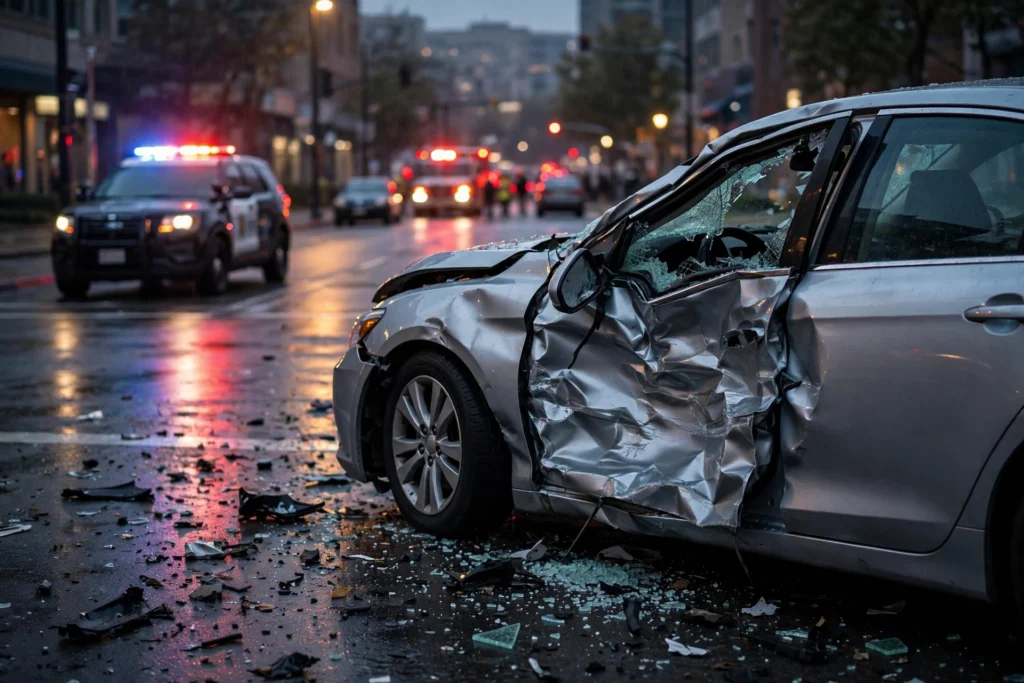
A T-bone crash is the kind of accident you never see coming — because it comes from the side. You are driving through an intersection, maybe on a green light, doing everything right, when another vehicle slams into the side of your car. There is no front crumple zone to absorb the blow, no engine block between you and the impact — just a door, a window, and a few inches of steel between your body and thousands of pounds of metal arriving at full speed.
If you are searching for the average settlement for a T-bone car accident, you are asking a smart, practical question. The medical bills from a side-impact crash can be staggering, you may be out of work for weeks or months, and the insurance company has almost certainly already started working to pay you as little as possible. Knowing what these claims are typically worth — and, more importantly, what pushes a settlement up or down — is the first step toward getting what you actually deserve.
Here is the honest answer up front: the average settlement for a T-bone car accident typically ranges from around $20,000 for minor injuries to well over $1 million for catastrophic injuries or wrongful death. Most claims with moderate injuries — the most common band for side-impact crashes — settle somewhere between $50,000 and $175,000. But those numbers only mean something in context. Your settlement depends on your injuries, your medical costs, the insurance available, how fault is decided, and the strength of your evidence.
This guide walks you through realistic 2026 settlement ranges by injury severity, explains why insurers treat T-bone crashes differently from other accident types, breaks down exactly what drives your claim’s value up or down, compares side-impact settlements to other crash types, and lays out the claims process step by step. Nothing here is hype or guesswork: the ranges reflect how these claims actually resolve in the real world, and the cited statistics come from authoritative sources. By the end, you will know what is reasonable to expect, what to watch out for, and when it makes sense to get professional legal help.
Why T-Bone Accidents Are Treated Differently by Insurers
Not all car accidents are valued the same way. Insurance adjusters, attorneys, and courts all recognize — sometimes implicitly — that T-bone collisions belong in their own category. Here is why.
The Physics: Almost No Protection on Your Side
In a front or rear collision, you have the engine compartment or the trunk, a crumple zone engineered to fold and absorb energy, and several feet of distance between you and the impact. In a T-bone crash, that protection barely exists. The impact point is a door — sometimes just a few inches from your hip, ribs, or head.
Vehicle safety engineers take this vulnerability seriously. NHTSA’s New Car Assessment Program runs a dedicated side barrier crash test specifically designed to replicate an intersection-type collision: a 3,000-pound barrier moving at 38.5 mph strikes the side of a standing vehicle, and instruments measure the forces on the head, neck, chest, abdomen, and pelvis of crash test dummies (see NHTSA’s side crash test program). The test exists precisely because side impacts are so dangerous — and so different from frontal crashes.
The mismatch gets worse when vehicle sizes differ. NHTSA’s Traffic Safety Facts data on passenger vehicles found that when the front of a light truck or SUV hit the side of a passenger car, an occupant was between 13.3 and 24.8 times more likely to be killed in the passenger car than in the larger vehicle (see the NHTSA Traffic Safety Facts: Passenger Vehicles report). If you were in the smaller vehicle in a T-bone crash, this physics worked against you — and it is also one reason your settlement may be larger: your injuries are typically more severe, your medical costs higher, and the other driver’s responsibility more obvious.
The Injuries: Head, Chest, and Pelvis Take the Hit
T-bone crashes produce a distinctive injury pattern. Because the impact lands directly on the side of the vehicle, the most common serious injuries involve the head (striking the window frame, the intruding door, or the other vehicle’s front end), the ribs and chest, the shoulder and arm on the struck side, and the pelvis and hips. Common injuries in side-impact crashes include traumatic brain injuries, multiple rib fractures, collapsed lungs, herniated discs from the violent lateral forces, hip and pelvic fractures, shoulder injuries, and severe internal bleeding.
It is common for a single T-bone victim to suffer several significant injuries at once — and each one adds medical costs, recovery time, and pain to the claim. These are not injuries that resolve in a few weeks of physical therapy. A herniated disc can mean months of treatment, injections, or spinal surgery. Pelvic fractures can require screws and plates plus months of rehabilitation. Traumatic brain injuries may require cognitive rehabilitation and can permanently change memory, mood, and earning ability. When insurers evaluate your claim, they look at the total picture: the medical bills so far, the treatment you will need in the future, the wages you have lost, and the ways your daily life has changed. In T-bone cases, that total picture is almost always larger than in a fender bender or low-speed rear-end crash.
Fault Is Often Clear — But Disputes Still Happen
Here is the one silver lining: in most T-bone collisions, fault is relatively straightforward. Someone ran a red light, blew through a stop sign, or failed to yield on a left turn — and the other driver simply had nowhere to go. Police reports, traffic camera footage, skid marks, witness statements, and the damage patterns on the vehicles usually establish which driver violated the right of way. When fault is clear and the injuries are serious, insurers are more motivated to settle rather than fight a losing battle in front of a jury.
That said, the other side’s insurer will still look for ways to reduce what they pay. They may argue you were speeding, distracted, or could have avoided the intersection. They may dispute who had the green light when there is no camera footage. In states with comparative fault rules, any percentage of blame assigned to you reduces your settlement by that percentage. And in the small number of cases where both drivers share blame — say, both entered the intersection on questionable timing — fault becomes a genuine battle. This is why evidence matters so much, and why you should never give the other driver’s insurer a recorded statement without understanding how your words could be used against you.
Average Settlement for a T-Bone Car Accident by Injury Severity
So what is the average settlement for a T-bone car accident? The honest answer is that a single “average” number is misleading — these claims vary enormously, from tens of thousands to well over a million dollars. What actually matters is where your injuries fall on the severity spectrum. The table below shows realistic settlement bands based on how T-bone claims typically resolve in the United States, along with the injury patterns and claim characteristics each band represents.
| Injury Severity | Typical Settlement Range | Common Injuries | Notes |
|---|---|---|---|
| Minor | $20,000 – $60,000 | Whiplash, bruises, minor cuts, sprains | Less common in true high-speed side impacts; usually settles without a lawsuit; soft-tissue claims face skepticism from adjusters |
| Moderate | $50,000 – $175,000 | Rib or shoulder fractures, herniated discs, concussions, lacerations needing stitches | The most common band for survivable T-bone crashes; often requires months of treatment and physical therapy |
| Serious | $175,000 – $600,000 | Pelvic fractures, multiple fractures, traumatic brain injury, spinal injuries requiring surgery | Frequently involves expert testimony and future medical cost projections; litigation is common |
| Catastrophic | $600,000 – $1,000,000+ | Paralysis, severe TBI, amputations, permanent disability, wrongful death | Policy limits and underinsured motorist coverage often set the ceiling; wrongful death claims can exceed $1M |
A few important caveats about these ranges. First, they describe settlements, not jury verdicts — the vast majority of claims settle out of court, often for less than a jury might award but with far more certainty. Second, the catastrophic band is heavily influenced by available insurance: a $2 million claim against a driver with a $50,000 policy and no assets will not settle for $2 million, no matter how severe the injuries. Third, these are national bands; jury attitudes and cost of living mean the same injury can settle higher in some states and lower in others. Finally, minor injuries are genuinely rare in true high-speed T-bone collisions — if your crash was labeled “side impact” but the speeds were very low, your claim may behave more like an ordinary collision.
Reading the Table Honestly
The spread in each row is wide for a reason. Two people can suffer nearly identical side impacts and settle for dramatically different amounts. The difference usually comes down to three things: how severe and permanent the harm was, how clearly the evidence shows the other driver was at fault, and how much insurance is actually available. A concussion that resolved in two months and a concussion with lasting cognitive symptoms are different cases, and they settle like different cases.
Location matters enormously too. The same set of facts can be worth far more in a state with generous jury verdicts and no damage caps than in a state with strict limits on non-economic damages. We will cover state-by-state differences later in this guide — they may be the single biggest factor in what your claim is worth.
How T-Bone Settlements Compare to Other Crash Types
It helps to put T-bone settlements in context. Side-impact crashes generally settle for more than rear-end collisions of similar speed, because the injuries are more severe and more likely to involve the head and torso. They are roughly comparable to — and sometimes slightly below — head-on collisions, which involve even greater combined impact forces but are rarer. Compared with pedestrian accidents, which often produce catastrophic injuries at low speeds, T-bone settlements follow a similar logic: the less protection around the victim, the higher the typical recovery. If you want to see how these bands stack up against another high-severity category, our guide to the average settlement for a pedestrian hit by a car shows a similar severity-driven pattern.
The broader takeaway: insurers price claims by expected jury outcomes, and juries respond to visible, serious injuries with clear fault. T-bone crashes deliver both — violent, easy-to-understand injury mechanics and, in most cases, an obviously at-fault driver who ran a light or a sign. That combination is why side-impact claims tend to land in the upper half of the car accident settlement spectrum.
What Pushes Your Settlement Up or Down
Two people can be in nearly identical T-bone crashes and walk away with very different settlements. The difference comes down to a handful of factors that every adjuster and attorney weighs. Understanding them helps you avoid the mistakes that quietly shrink claims — and take the steps that protect their full value.
Insurance Policy Limits: The Hard Ceiling
The single most important number in your claim may not be your medical bills — it may be the at-fault driver’s insurance policy limit. If the driver who ran the red light carries only your state’s minimum liability coverage (often $25,000–$50,000 per person), that is frequently the maximum you can recover from their insurer, regardless of how badly you were hurt. This is the harsh arithmetic behind many disappointing T-bone settlements.
This is also where your own uninsured/underinsured motorist (UM/UIM) coverage becomes critical. If you carry $250,000 or $500,000 in UIM coverage, you can claim the difference between the at-fault driver’s limits and your own — turning a $50,000 policy-limits settlement into a much fairer recovery. If you haven’t checked your UM/UIM limits recently, do it now; it is one of the most valuable lines on your entire auto policy. For context on what ordinary claims look like, the Insurance Information Institute reports that the average auto liability claim for bodily injury was $28,278 — but T-bone crashes with serious injuries routinely exceed that figure many times over (see the III Facts + Statistics: Auto Insurance page).
Medical Costs — Current and Future
Medical expenses are the foundation of most settlements. Emergency room care, ambulance transport, surgery, hospitalization, imaging, physical therapy, and prescriptions all count — and in T-bone crashes these add up fast. A single orthopedic surgery for a shattered pelvis can cost $50,000–$150,000 before you ever leave the hospital. But the claims that settle highest don’t just count what has been spent; they include future medical costs. If your doctor says you will need a second surgery, years of pain management, or ongoing cognitive therapy for a brain injury, a life-care plan from a medical expert can add hundreds of thousands of dollars to your claim’s value.
The documentation rule is simple: treat consistently, follow your doctors’ orders, and keep every record. Gaps in treatment — weeks where you skipped physical therapy or didn’t see a doctor — are the single most common reason insurers argue your injuries “must not be that bad.” Every missed appointment is ammunition for the other side. If cost is the reason you are not treating, talk to an attorney; many personal injury lawyers can arrange treatment on a medical lien, where providers wait for the settlement to be paid.
Lost Income and Earning Capacity
If your injuries kept you from working, your lost wages are recoverable — and in T-bone crashes, the time off is often measured in months, not days. But the bigger number is frequently lost earning capacity: the income you will lose in the future because you can’t do the same work anymore. A warehouse worker with a fractured pelvis, a nurse with a traumatic brain injury that affects concentration, a delivery driver who can no longer sit for long hours — these are six- and seven-figure losses when projected over a career.
Proving lost earning capacity usually requires expert testimony: a vocational expert to show what work you can no longer do, and an economist to calculate the lifetime difference. Claims involving these experts are more expensive to build, which is one reason seriously injured victims benefit most from experienced legal representation — the expert fees come out of the settlement, but the increase in value typically dwarfs the cost.
Pain, Suffering, and Loss of Enjoyment of Life
Your non-economic damages — pain, suffering, emotional distress, anxiety, loss of enjoyment of life, and the strain on your relationships — often make up the largest portion of a serious T-bone settlement. There is no receipt for chronic pain or for the fear you feel every time you approach an intersection now. Insurers typically value these damages using a multiplier of your medical bills (often 1.5× to 5×, higher for permanent injuries) or a per-day “per diem” figure, but in practice they reflect how convincingly your story is told.
This is where your own records matter enormously. A pain journal — a few honest lines each day about what hurts, what you couldn’t do, how you slept, how the injury affected your mood or your family — is one of the most powerful tools in a serious claim. Photos of your injuries over time, statements from family members about how you have changed, and mental health treatment records for crash-related anxiety or PTSD all give substance to damages that insurers would otherwise dismiss as vague.
Your Share of Fault: Comparative Negligence
Almost every state reduces your recovery by your percentage of fault — this is comparative negligence. If a jury or adjuster decides you were 20 percent at fault (perhaps for speeding through the intersection or being distracted), your $200,000 settlement becomes $160,000. A handful of states still use contributory negligence, where even 1 percent of fault can bar recovery entirely — a brutal rule that makes evidence and legal guidance especially important in those jurisdictions.
In T-bone crashes, fault disputes usually center on the intersection itself: Who had the green light? Who entered first? Were you speeding? Was the other driver distracted? The other driver’s insurer will investigate all of this, which is why you should never speculate about what happened when talking to them, in writing, or on social media. To understand exactly how shared fault works where you live, read our guide to comparative negligence and partial fault in car accident claims. Stick to facts you know, and let the police report, physical evidence, and witnesses do the arguing.
The Quality of Your Evidence
Strong claims are built, not found. The police report, photos of the scene and vehicle damage, witness statements, traffic camera or dashcam footage, your medical records, and the other driver’s toxicology results (red-light running combined with impairment is a recurring pattern in serious T-bone crashes) all feed into settlement value. Cases with clear, well-organized evidence settle faster and for more — the insurer can see exactly what a jury would see.
If you are reading this soon after your crash, start a simple file today: the police report number, photos, medical bills, pay stubs showing lost wages, and a running log of symptoms and missed activities. Wondering what your car accident claim is worth is natural — but the claims that answer that question with the highest numbers are almost always the ones with the most complete documentation. For a step-by-step checklist of the critical early actions that protect your claim’s value, see our guide on how to maximize your car accident settlement.
The T-Bone Claims Process, Step by Step
Knowing the road ahead removes a lot of the anxiety. Here is how a typical T-bone claim unfolds, from the crash scene to the settlement check.
1. The First 48 Hours: Protect Your Health and Your Claim
Get medical attention immediately, even if you feel “mostly okay.” Adrenaline masks injuries, and side-impact crashes frequently cause injuries — concussions, internal bleeding, herniated discs — that do not announce themselves for hours or days. Call the police and make sure a report is filed; in a disputed-light case, that report is gold. Photograph everything: both vehicles, the intersection, traffic signals, skid marks, your visible injuries. Get names and phone numbers of witnesses before they leave the scene. And notify your own insurer promptly — but do not give the other driver’s insurer a recorded statement.
2. Filing the Claim
Most T-bone claims begin with a demand to the at-fault driver’s liability insurer. Your attorney (or you, if the case is simple) assembles the evidence — police report, medical records and bills, proof of lost wages, photos — and sends a demand letter stating what you are owed. The insurer investigates, which can take weeks to months, and then responds with an offer, a counter, or occasionally a denial that forces the next step.
3. Negotiation and Settlement
Negotiation is where most T-bone claims resolve. Your side presents the full picture of your damages — including future medical costs and pain and suffering — and the adjuster pushes back on every element they can. This back-and-forth can take several rounds. A critical rule: do not settle until your medical picture is complete or your doctors can give a reliable long-term prognosis. Settling early, before the full extent of a brain injury or spinal injury is known, is one of the most common ways victims leave money on the table.
4. When Litigation Becomes Necessary
If the insurer disputes fault, undervalues serious injuries, or refuses to offer policy limits in a catastrophic case, filing a lawsuit may be the only way to get a fair number. Most filed cases still settle before trial — often at mediation, where a neutral third party helps both sides find a number. Going to trial is the exception, not the rule, but the credible willingness to go to trial is often what forces a fair settlement offer in the first place.
State-by-State Variations That Can Change Everything
Two identical T-bone crashes in two different states can produce very different settlements. Three state-level differences matter most.
Damage Caps
Many states cap non-economic damages (pain and suffering) in certain cases, and a few cap total damages. These caps bite hardest in serious-injury T-bone claims, where pain and suffering can be the largest component. If your state has a cap, your attorney’s strategy will shift toward maximizing the economic damages — medical costs, lost wages, future care — that the cap does not touch.
No-Fault vs. At-Fault States
In the dozen or so no-fault states, your own personal injury protection (PIP) coverage pays your initial medical bills and lost wages regardless of who caused the crash, and you can only step outside the no-fault system to sue the at-fault driver if your injuries cross a “serious injury” threshold. T-bone injuries frequently cross that threshold — but in a no-fault state, expect an extra legal hurdle before you can pursue a full liability claim.
Statutes of Limitations
Every state sets a deadline for filing a personal injury lawsuit — most commonly two to three years from the crash, but as short as one year in some states. Miss the deadline and you lose the right to recover anything, no matter how strong your claim. Claims involving government entities — for example, if a malfunctioning traffic signal contributed to the crash — often require formal notice within months. Confirm your state’s deadline early and don’t assume you have plenty of time.
Frequently Asked Questions
1. What is the average settlement for a T-bone car accident in the USA?
There is no single meaningful average because T-bone settlements range so widely — from around $20,000 for minor injuries to over $1 million for catastrophic injuries or wrongful death. Moderate injury claims, the most common survivable band, typically settle between $50,000 and $175,000, while serious injury claims often land between $175,000 and $600,000. Your actual recovery depends on injury severity, medical costs, lost income, available insurance limits, and fault.
2. Are T-bone accident settlements higher than rear-end settlements?
Yes, generally. T-bone crashes involve direct impact to the side of the vehicle, where occupants have far less structural protection than in a front or rear collision. That produces more severe head, chest, and pelvic injuries, which drives up medical costs, lost wages, and pain-and-suffering damages. A moderate T-bone claim often settles for two to three times what a comparable low-speed rear-end claim would. The trade-off is that T-bone claims also take longer to resolve and more often require litigation.
3. How long does it take to settle a T-bone accident claim?
Most T-bone claims take between 6 months and 2 years to settle. Moderate injury claims with clear fault may resolve in 4–9 months, while serious injury claims often take 12–24 months because attorneys wait until your long-term prognosis is known before negotiating. Catastrophic and wrongful death claims can take two years or longer. Settling before your medical picture is complete is risky and usually means accepting less than your claim is worth.
4. What if the other driver was uninsured or underinsured?
This is one of the most common problems in serious crash claims. If the at-fault driver has no insurance or only minimum limits, you can turn to your own uninsured/underinsured motorist (UM/UIM) coverage, which pays the difference up to your policy limits. If you lack UM/UIM coverage, you may be able to sue the driver personally — but uninsured drivers often have few recoverable assets. Check your UM/UIM limits now; increasing them is one of the cheapest and most important insurance decisions you can make.
5. Can I still recover compensation if I was partly at fault for a T-bone crash?
In most states, yes. Under comparative negligence rules, your settlement is reduced by your percentage of fault — so a $200,000 claim becomes $160,000 if you were 20 percent at fault. About a dozen states use modified comparative fault, which bars recovery if you were 50 or 51 percent (or more) at fault. A few states still use pure contributory negligence, where any fault at all can bar recovery. Fault disputes in T-bone cases usually center on who had the right of way, so the police report and any camera footage matter enormously.
6. Should I accept the insurance company’s first offer after a T-bone crash?
Almost never — at least not without having it reviewed. First offers are typically low, and they often arrive before the full extent of your injuries is known. Once you accept and sign a release, your claim is closed permanently, even if complications surface later. A fair evaluation requires knowing your complete medical prognosis, total bills, lost income, and future care needs. If an offer arrives quickly after a serious crash, treat it as a starting point, not a fair number.
7. What if I was a passenger in a T-bone collision?
Passengers are in a strong legal position: they are virtually never at fault for the crash, so fault disputes rarely affect their claims. As a passenger, you can typically file claims against the at-fault driver’s insurance and, in some situations, against the driver of the car you were riding in (for example, if both drivers shared fault). Passengers can also use their own UM/UIM coverage in many states. The same settlement bands apply — your recovery is driven by your injuries and the available coverage, not by your role in the car.
8. How are pain and suffering calculated in T-bone accident claims?
There is no fixed formula, but insurers and attorneys commonly use two methods: the multiplier method (1.5 to 5 times your medical bills, with higher multipliers for permanent or severe injuries) and the per diem method (a daily dollar amount for each day you suffered). In practice, pain-and-suffering awards reflect the credibility of your story — consistent medical treatment, a pain journal, photos of injuries, and testimony from family about how the crash changed your life all increase this portion of the settlement. In serious T-bone cases, non-economic damages often exceed the medical bills themselves.
9. Does a T-bone accident claim have to go to court?
No — the overwhelming majority of T-bone claims settle out of court, often during negotiation or mediation. Lawsuits are filed when the insurer disputes fault, undervalues serious injuries, or refuses to offer policy limits in a catastrophic case. Even after a lawsuit is filed, most cases still settle before trial. Going to trial is the exception, not the rule, but the willingness to go to trial is often what forces a fair settlement offer.
10. What is the statute of limitations for a T-bone accident lawsuit?
It depends on your state. Most states give you two to three years from the date of the crash to file a personal injury lawsuit, but some allow only one year, and a few allow more. Wrongful death claims sometimes have different deadlines than injury claims. Claims involving government entities — for example, if a malfunctioning traffic signal contributed to the crash — often require formal notice within months. Because missing the deadline permanently bars your claim, confirm your state’s limit early and don’t assume you have plenty of time.
Key Takeaway
A T-bone collision is one of the most dangerous crashes you can experience, because the side of your car offers so little protection from the impact — and the settlement should reflect that reality. While the average settlement for a T-bone car accident varies enormously — roughly $20,000–$60,000 for minor injuries, $50,000–$175,000 for moderate injuries, $175,000–$600,000 for serious injuries, and $600,000 to over $1 million for catastrophic injuries or wrongful death — your claim’s true value comes down to your specific injuries, your medical costs and lost income, the insurance available, and the strength of your evidence.
The most important things you can do right now are simple: get consistent medical treatment and follow your doctors’ orders, document everything, don’t rush into a quick settlement, and be careful what you say to insurance adjusters. If your injuries are serious, a free consultation with a personal injury attorney costs nothing and can be the difference between a settlement that barely covers your bills and one that truly accounts for what this crash has cost you. You didn’t ask for this crash — but you can control what happens next.
Legal Disclaimer
Disclaimer: This article provides general information for educational purposes only and is not legal advice. Settlement amounts, liability rules, and filing deadlines for side-impact car accident claims vary significantly by state. For guidance about your specific situation, consult a licensed attorney in your state.
