How Long Does a Car Accident Settlement Take
Car accidents are one of the most common causes of personal injury claims in the United States. Every year, millions of drivers are involved in crashes that lead to property damage, medical expenses, and legal disputes over liability.
After a serious accident, many victims pursue compensation through insurance claims or personal injury lawsuits. One of the most common questions people ask is:
How long does a car accident settlement take?
The answer depends on several factors such as the severity of injuries, insurance negotiations, and whether the case goes to trial.
In many situations, car accident settlements may take 3 months to 12 months. However, more complex cases involving serious injuries or disputed liability can take one to three years to resolve.
According to official road safety statistics, thousands of injury-related car accidents occur every year in the United States, which often leads to insurance claims and settlement negotiations.
External authority source:
car accident statistics in the United States
https://www.nhtsa.gov/road-safety
Understanding the settlement timeline helps accident victims prepare for the legal process and avoid unrealistic expectations about compensation.
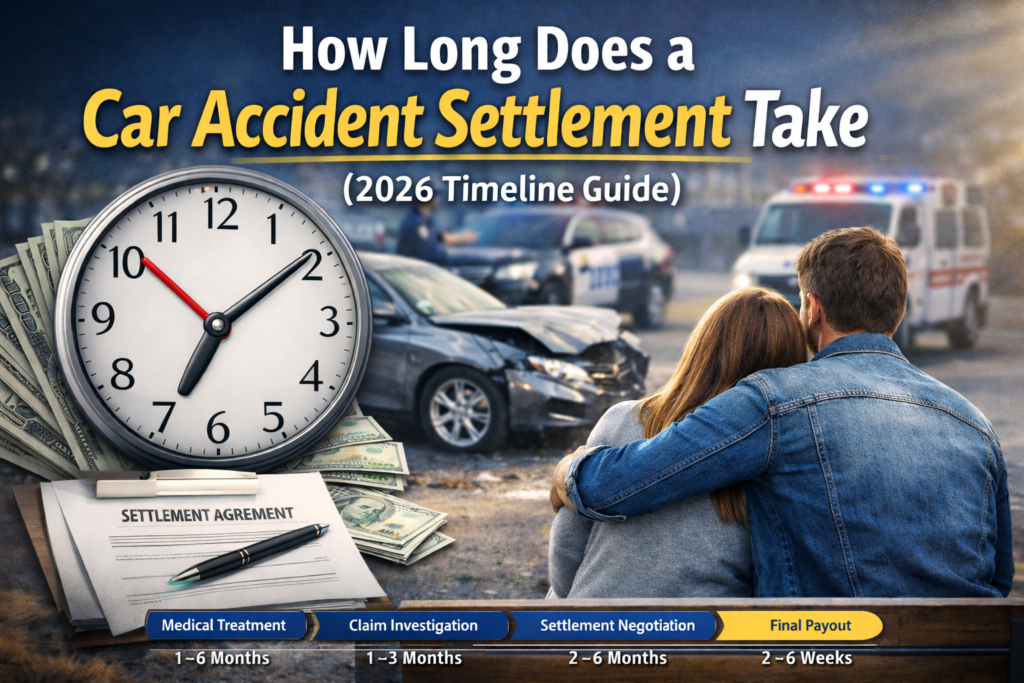
Average Car Accident Settlement Timeline
The timeline of a car accident settlement varies depending on several stages of investigation, negotiation, and legal review.
Typical settlement timeline:
| Stage | Average Time |
|---|---|
| Medical treatment | 1–6 months |
| Claim investigation | 1–3 months |
| Settlement negotiation | 2–6 months |
| Final payout processing | 2–6 weeks |
Overall, most car accident settlements take 6 to 12 months, although complicated cases may take longer.
Car Accident Settlement Process
To understand why settlements take time, it is important to understand the steps involved in the legal process.
Step 1: Medical Treatment and Recovery
Before settlement negotiations begin, victims must complete medical treatment or reach a point called maximum medical improvement (MMI).
MMI means the victim has recovered as much as possible and doctors can estimate long-term medical needs.
Medical treatment may include:
-
emergency care
-
surgery
-
physical therapy
-
rehabilitation
Insurance companies typically wait until treatment is complete before evaluating settlement value.
Step 2: Accident Investigation
After the accident occurs, insurance companies and lawyers investigate the case to determine who was responsible.
Evidence used during investigations includes:
-
police reports
-
accident photos
-
witness statements
-
medical records
The investigation process helps determine liability and estimate damages.
Step 3: Filing an Insurance Claim
Most car accident settlements begin with an insurance claim against the at-fault driver’s insurance company.
Insurance companies evaluate claims based on several factors including:
-
accident liability
-
severity of injuries
-
medical expenses
-
property damage
Understanding how insurance claims work after car accidents can help victims estimate how long negotiations may take.
External authority source:
https://www.iii.org/article/auto-insurance-basics
Step 4: Settlement Negotiations
Once the claim is reviewed, attorneys send a demand letter to the insurance company requesting compensation.
The demand letter usually includes:
-
medical bills
-
lost wage documentation
-
evidence of pain and suffering
-
accident reports
Insurance companies typically respond with a lower settlement offer.
Negotiations may continue for several weeks or months until both parties agree on a final settlement.
Factors That Affect Settlement Time
Not every car accident case moves at the same speed. Several factors influence how long a settlement takes.
Injury Severity
More serious injuries require longer medical treatment and documentation, which can delay settlements.
Example injury impact:
| Injury Type | Settlement Timeline |
|---|---|
| Minor injuries | 3–6 months |
| Broken bones | 6–12 months |
| Severe injuries | 1–2 years |
Serious injuries usually lead to larger settlements but require more time to calculate damages.
Liability Disputes
If both drivers blame each other for the accident, settlement negotiations may take longer.
Insurance companies may conduct additional investigations such as accident reconstruction.
Insurance Company Negotiations
Insurance companies often delay negotiations while reviewing evidence and evaluating claims.
In many cases, insurers initially offer lower settlement amounts, requiring multiple rounds of negotiation.
Real Settlement Timeline Examples
The timeline for settlements can vary depending on case complexity.
Examples:
| Case Type | Settlement Time |
|---|---|
| Minor accident injury | 3–6 months |
| Moderate injury accident | 6–12 months |
| Severe injury accident | 12–24 months |
Cases involving permanent injuries or long-term medical treatment may take longer to resolve.
Detailed Car Accident Settlement Timeline (Step-by-Step Legal Process)
Understanding how long a car accident settlement takes requires a closer look at each stage of the legal process. While some claims resolve quickly, others involve extensive investigations, medical treatment, and negotiations with insurance companies.
Below is a detailed breakdown of how a typical car accident claim progresses from the moment the accident occurs until the final compensation payment is issued.
Stage 1: Immediate Medical Treatment
The first priority after a car accident is medical treatment. Even if injuries seem minor, victims are advised to seek medical attention immediately.
Medical documentation is essential for both insurance claims and personal injury lawsuits. Without medical records, proving that injuries were caused by the accident becomes much more difficult.
Common medical treatments following car accidents include:
-
emergency room evaluation
-
diagnostic scans such as X-rays or CT scans
-
physical therapy
-
orthopedic treatment
-
rehabilitation programs
In many cases, medical treatment can last several months. Lawyers usually recommend waiting until treatment is completed before negotiating settlements so that the full cost of medical care can be calculated.
Example medical timeline:
| Medical Stage | Estimated Time |
|---|---|
| Emergency treatment | Same day |
| Diagnostic evaluation | 1–2 weeks |
| Physical therapy | 1–6 months |
| Long-term recovery | Up to 1 year |
The duration of treatment directly affects the settlement timeline.
Stage 2: Accident Investigation
After medical treatment begins, attorneys and insurance companies start investigating the accident.
The purpose of the investigation is to determine who was responsible for the crash and how the accident occurred.
Important evidence collected during this stage may include:
-
police accident reports
-
witness statements
-
vehicle damage photos
-
surveillance or dashcam footage
-
accident reconstruction analysis
This investigation phase may take several weeks or months depending on the complexity of the case.
Example investigation timeline:
| Investigation Task | Estimated Duration |
|---|---|
| Police report review | 1–2 weeks |
| Evidence collection | 2–4 weeks |
| Witness interviews | 2–6 weeks |
| Accident reconstruction | 1–2 months |
If liability is clear, the settlement process may move faster. However, if both parties dispute fault, the investigation may take significantly longer.
Stage 3: Insurance Claim Evaluation
Once evidence is gathered, the insurance company reviews the claim and determines how much compensation may be offered.
Insurance adjusters evaluate several factors when assessing claims.
These include:
-
medical expenses
-
lost wages
-
property damage
-
injury severity
-
liability evidence
Insurance companies often request additional documentation before making settlement offers.
Typical documents requested include:
-
hospital bills
-
physician reports
-
employment income records
-
vehicle repair estimates
Insurance adjusters also calculate non-economic damages such as pain and suffering.
Example compensation calculation:
| Damage Type | Estimated Amount |
|---|---|
| Medical expenses | $25,000 |
| Lost wages | $15,000 |
| Vehicle repair | $10,000 |
| Pain and suffering | $40,000 |
Total potential settlement value: $90,000
However, the first settlement offer is usually lower than the final negotiated amount.
Stage 4: Sending a Demand Letter
After medical treatment is completed and evidence is collected, the victim’s attorney sends a demand letter to the insurance company.
The demand letter outlines the compensation requested and includes supporting documentation.
Typical elements of a demand letter include:
-
summary of the accident
-
proof of liability
-
medical records and bills
-
lost wage documentation
-
pain and suffering calculations
Demand letters often request compensation higher than the expected final settlement to allow room for negotiation.
Example demand calculation:
| Damage Category | Requested Amount |
|---|---|
| Medical expenses | $40,000 |
| Lost wages | $20,000 |
| Property damage | $15,000 |
| Pain and suffering | $80,000 |
Total demand: $155,000
The insurance company usually responds within several weeks with a counteroffer.
Stage 5: Settlement Negotiations
Settlement negotiations are often the longest stage of the process.
Insurance companies rarely accept the initial demand immediately. Instead, negotiations may involve several rounds of offers and counteroffers.
Typical negotiation steps include:
-
Attorney sends demand letter
-
Insurance company reviews evidence
-
Insurance company offers lower settlement
-
Attorney negotiates higher compensation
-
Both parties eventually agree on a final settlement
Example negotiation timeline:
| Negotiation Stage | Duration |
|---|---|
| Insurance review | 2–4 weeks |
| Initial settlement offer | 1 month |
| Counteroffers | 1–3 months |
| Final settlement agreement | 1–2 weeks |
Negotiations may take longer if the insurance company disputes the value of the claim.
Stage 6: Filing a Lawsuit (If Necessary)
If settlement negotiations fail, the victim’s attorney may file a personal injury lawsuit.
Filing a lawsuit does not necessarily mean the case will go to trial. Many lawsuits still settle before reaching court.
The lawsuit process may involve:
-
discovery phase
-
depositions
-
expert witness testimony
-
mediation or arbitration
Example litigation timeline:
| Litigation Stage | Estimated Time |
|---|---|
| Lawsuit filing | 1 month |
| Discovery phase | 6–12 months |
| Mediation | 1–2 months |
| Trial preparation | 6 months |
Because trials can take years, many cases settle during litigation.
Stage 7: Settlement Agreement and Payment
Once both parties agree on a settlement amount, a written agreement is signed.
This agreement usually includes a release of liability, meaning the victim agrees not to pursue further legal action related to the accident.
After signing the agreement, payment processing begins.
Typical settlement payment timeline:
| Payment Stage | Duration |
|---|---|
| Settlement agreement signed | Immediate |
| Insurance processing | 2–4 weeks |
| Funds transferred | 1–2 weeks |
Most victims receive their compensation within 30 to 45 days after settlement approval.
Why Some Settlements Take Longer
While many claims settle within a year, some cases take longer due to complications.
Common reasons for delays include:
-
severe injuries requiring long-term treatment
-
disputed liability between drivers
-
multiple insurance companies involved
-
large commercial vehicle accidents
-
cases involving permanent disability
Complex cases may take two or more years to fully resolve.
Understanding these potential delays helps accident victims prepare for the legal process.
Factors That Delay Car Accident Settlements & How Lawyers Speed Up the Process
Car accident settlements do not always follow a predictable timeline. While some claims resolve in just a few months, others may take years depending on the complexity of the case.
Understanding the factors that influence settlement timelines helps accident victims prepare for potential delays and avoid unnecessary frustration during the legal process.
Injury Severity and Medical Recovery
One of the biggest factors affecting settlement timelines is the severity of the injuries sustained in the accident.
Insurance companies typically wait until the injured person reaches maximum medical improvement (MMI) before agreeing to a settlement. MMI means doctors believe the patient has recovered as much as possible and future medical needs can be estimated.
If the victim is still undergoing treatment, the insurance company cannot accurately calculate compensation.
Examples of injury timelines:
| Injury Type | Average Recovery Time | Settlement Impact |
|---|---|---|
| Minor whiplash | 1–3 months | Faster settlement |
| Broken bones | 3–6 months | Moderate delay |
| Spinal injuries | 6–12 months | Longer timeline |
| Traumatic brain injury | 1–2 years | Major delay |
Severe injuries often lead to larger settlements, but they also require longer recovery periods and additional medical documentation.
Liability Disputes Between Drivers
Another major factor affecting settlement timelines is determining who was responsible for the accident.
If liability is clear—for example when a driver runs a red light—the claim may resolve quickly. However, many accidents involve disputes about fault.
Insurance companies may investigate several elements before accepting liability:
-
police accident reports
-
witness statements
-
traffic camera footage
-
vehicle damage analysis
-
accident reconstruction reports
When both drivers blame each other, negotiations can become complicated and may delay settlements for months.
Example liability dispute timeline:
| Investigation Step | Estimated Time |
|---|---|
| Evidence review | 2–4 weeks |
| Witness interviews | 2–6 weeks |
| Accident reconstruction | 1–2 months |
| Insurance liability decision | 1–3 months |
The more complicated the accident investigation, the longer the settlement process may take.
Multiple Parties Involved in the Accident
Car accidents involving multiple vehicles often take longer to settle because several insurance companies may be involved.
For example, a highway accident may involve:
-
multiple drivers
-
commercial vehicles
-
rideshare drivers
-
trucking companies
Each insurance company must conduct its own investigation before agreeing to compensation.
Example multi-vehicle accident scenario:
| Number of Vehicles | Settlement Complexity |
|---|---|
| Two vehicles | Simple |
| Three vehicles | Moderate |
| Four or more vehicles | Complex |
Cases involving several drivers can take much longer to resolve due to shared liability issues.
Insurance Company Negotiation Tactics
Insurance companies often use negotiation strategies that may delay settlements.
These strategies are designed to reduce payout amounts or encourage victims to accept lower compensation offers.
Common insurance tactics include:
-
requesting additional documentation
-
delaying responses to demand letters
-
disputing medical expenses
-
offering low initial settlement amounts
Because insurance companies aim to protect their financial interests, settlement negotiations may take several rounds before reaching an agreement.
Example negotiation pattern:
| Negotiation Round | Settlement Offer |
|---|---|
| Initial demand | $120,000 |
| Insurance offer | $45,000 |
| Second negotiation | $75,000 |
| Final agreement | $95,000 |
This back-and-forth negotiation process can take several months.
The Role of Medical Documentation
Medical evidence plays a crucial role in personal injury settlements. Without detailed documentation, proving injury severity becomes difficult.
Insurance companies carefully review medical records before approving compensation.
Important medical documents include:
-
hospital treatment records
-
physician reports
-
diagnostic imaging results
-
physical therapy documentation
-
medical bills
Delays often occur when insurance companies request additional medical documentation.
Accurate and organized medical records can help accelerate the settlement process.
Impact of Legal Representation
Hiring an experienced personal injury lawyer can significantly influence how long a settlement takes.
Experienced attorneys understand the negotiation process and know how to deal with insurance companies effectively.
Lawyers help speed up cases by:
-
gathering evidence quickly
-
organizing medical documentation
-
calculating accurate compensation values
-
negotiating aggressively with insurers
Without legal representation, accident victims may struggle to navigate the complex claims process.
Example settlement comparison:
| Representation | Average Settlement Time |
|---|---|
| Without lawyer | 6–18 months |
| With experienced attorney | 3–12 months |
Attorneys also help prevent victims from accepting unfair settlement offers.
Economic Damages in Car Accident Settlements
Car accident settlements often include several types of economic damages. These damages represent measurable financial losses caused by the accident.
Examples include:
-
hospital bills
-
physical therapy costs
-
medication expenses
-
lost wages
-
property damage
Example economic damage breakdown:
| Expense Type | Estimated Cost |
|---|---|
| Emergency medical treatment | $12,000 |
| Surgery | $35,000 |
| Physical therapy | $10,000 |
| Lost income | $18,000 |
| Vehicle repair | $7,000 |
Total economic damages may reach $82,000 or more depending on injury severity.
Non-Economic Damages
In addition to economic damages, accident victims may receive compensation for non-economic damages.
These damages represent emotional and physical suffering caused by the accident.
Examples include:
-
pain and suffering
-
emotional distress
-
loss of enjoyment of life
-
permanent disability
Lawyers often use multiplier methods to estimate these damages.
Example calculation:
| Damage Type | Amount |
|---|---|
| Economic damages | $80,000 |
| Multiplier (2.5x) | $200,000 |
| Estimated settlement value | $280,000 |
Non-economic damages often make up a large portion of car accident settlements.
Importance of Evidence in Settlement Cases
Strong evidence helps accelerate settlement negotiations because it clearly demonstrates liability and damages.
Important evidence used in car accident claims includes:
-
police reports
-
accident photographs
-
witness statements
-
medical documentation
-
vehicle repair records
When evidence strongly supports the victim’s claim, insurance companies may settle faster to avoid legal risks.
Why Some Cases Go to Trial
Although most car accident cases settle before trial, some disputes cannot be resolved through negotiations.
Trials may occur when:
-
insurance companies deny liability
-
settlement offers are unreasonably low
-
severe injuries involve large compensation amounts
Trials significantly increase the timeline of a case.
Example trial timeline:
| Litigation Phase | Estimated Duration |
|---|---|
| Lawsuit filing | 1 month |
| Discovery phase | 6–12 months |
| Pre-trial motions | 2–4 months |
| Trial proceedings | Several weeks |
Because trials are expensive and time-consuming, many cases settle during the litigation phase.
Car Accident Settlement Statistics, Tips to Speed Up Claims & Complete Guide
Car Accident Settlement Statistics in the United States
Car accident settlements are one of the most common types of personal injury claims in the United States. Because millions of crashes occur each year, insurance companies handle thousands of claims involving medical expenses, vehicle damage, and injury compensation.
While every case is different, legal industry statistics provide a general idea of how long settlements usually take and how much compensation victims may receive.
Typical settlement statistics include:
| Settlement Category | Average Value |
|---|---|
| Minor accident settlement | $10,000 – $25,000 |
| Moderate injury settlement | $25,000 – $100,000 |
| Severe injury settlement | $100,000 – $500,000 |
| Catastrophic injury settlement | $500,000 – $1M+ |
Most claims settle within 6 to 12 months, but cases involving severe injuries or disputed liability may take longer.
Understanding these statistics helps accident victims set realistic expectations when pursuing compensation.
How Long Insurance Companies Take to Respond
Insurance companies typically follow internal timelines when responding to accident claims. While the exact timeframe varies by company, most insurers respond within a few weeks after receiving a demand letter.
Typical response timeline:
| Stage | Average Time |
|---|---|
| Claim submitted | Immediately |
| Insurance review | 2–4 weeks |
| Initial settlement offer | 1–2 months |
| Negotiation period | 2–4 months |
Because insurance companies must verify evidence and evaluate damages, settlement negotiations rarely happen overnight.
How Lawyers Speed Up Car Accident Settlements
Experienced personal injury attorneys often help reduce settlement timelines by managing negotiations and preparing strong legal cases.
Attorneys speed up claims by:
-
collecting evidence quickly
-
organizing medical records
-
calculating accurate damage values
-
negotiating aggressively with insurers
Insurance companies are often more responsive when experienced attorneys represent accident victims.
Legal representation also helps prevent insurance companies from delaying claims unnecessarily.
Tips to Speed Up Your Car Accident Settlement
Although some delays are unavoidable, accident victims can take several steps to help move the settlement process faster.
Seek Medical Treatment Immediately
Prompt medical treatment helps create clear documentation linking injuries to the accident.
Keep Detailed Records
Accurate records of medical bills, treatment plans, and repair expenses help lawyers calculate damages quickly.
Avoid Posting About the Accident on Social Media
Insurance companies sometimes review social media posts during investigations. Avoid sharing details about the accident online.
Respond Quickly to Legal Requests
Providing documents quickly helps attorneys move negotiations forward without unnecessary delays.
Hire an Experienced Personal Injury Lawyer
Lawyers who specialize in accident cases understand the negotiation process and can help secure fair settlements faster.
Settlement vs Trial: Which Is Faster?
Most accident cases settle before reaching court because trials require more time and legal preparation.
Comparison between settlements and trials:
| Factor | Settlement | Trial |
|---|---|---|
| Average timeline | 6–12 months | 1–3 years |
| Legal expenses | Lower | Higher |
| Outcome certainty | Guaranteed | Uncertain |
| Stress level | Lower | Higher |
For these reasons, many accident victims prefer settlements instead of pursuing lengthy court trials.
When Settlements Take Longer Than Expected
Some cases may take longer due to complications such as severe injuries or multiple parties involved.
Common reasons for delays include:
-
ongoing medical treatment
-
liability disputes
-
multiple insurance companies
-
large commercial vehicle accidents
-
permanent disability claims
Complex cases may take two years or more before reaching a final resolution.
Financial Planning After Receiving a Settlement
Receiving a settlement can provide financial relief after a serious accident. However, careful planning helps ensure that compensation covers long-term needs.
Many victims use settlement funds for:
-
ongoing medical treatment
-
physical rehabilitation
-
vehicle replacement
-
household expenses
-
long-term financial security
Financial advisors often help accident victims create strategies for managing settlement funds responsibly.
15 Frequently Asked Questions (FAQs)
-
How long does a car accident settlement usually take
Most settlements take between 6 and 12 months. -
Can settlements happen faster than six months
Yes. Minor injury cases may settle within 3 to 6 months. -
Why do settlements sometimes take years
Serious injuries, liability disputes, and court cases can extend timelines. -
What is the average car accident settlement amount
Average settlements range between $10,000 and $100,000, depending on injuries. -
Do most accident cases go to trial
No. Most cases settle before reaching court. -
Can I negotiate a settlement offer
Yes. Settlement offers are usually negotiable. -
What evidence helps speed up settlements
Police reports, medical records, and witness statements are important. -
Should I accept the first settlement offer
Many lawyers recommend reviewing offers carefully before accepting. -
Do I need a lawyer for an accident settlement
While not required, legal representation often helps secure higher compensation. -
Can multiple insurance companies be involved
Yes. Multi-vehicle accidents often involve several insurers. -
How long after settlement do I receive payment
Most payments arrive within 30–45 days. -
What damages are included in accident settlements
Medical bills, lost wages, property damage, and pain and suffering. -
Are accident settlements taxable
Most personal injury settlements are not taxable. -
Can settlements include future medical expenses
Yes. Many settlements include projected medical costs. -
What if the insurance company refuses to settle
The case may proceed to court or mediation.
Conclusion
Car accident settlements are designed to compensate victims for the financial and emotional impact of motor vehicle accidents. While many people expect quick compensation, the settlement process often requires time to ensure all damages are properly evaluated.
The length of a settlement depends on several factors, including injury severity, liability disputes, medical treatment timelines, and insurance negotiations. Most cases resolve within six to twelve months, although more complicated cases may take longer.
Understanding how the settlement process works helps accident victims make informed decisions and avoid accepting unfair compensation offers. With proper documentation, legal guidance, and patience, victims can pursue fair financial recovery for medical expenses, lost wages, and long-term injuries.
Legal Disclaimer
This article is for informational purposes only and should not be considered legal advice. Laws governing personal injury claims vary by jurisdiction. Individuals involved in car accidents should consult qualified legal professionals regarding their specific situations.
#car accident settlement timeline
#average car accident settlement time
#car accident settlement process
#personal injury settlement timeline