
Introduction :Slip and Fall Settlement Amounts
You slipped, tripped, or fell on someone else’s property. Now you’re dealing with injuries, medical bills, missed work, and pain — and wondering: how much is my slip and fall case worth?
Slip and fall settlement amounts in the USA vary widely — from a few thousand dollars for minor injuries to over $1 million for severe, life-altering cases. The amount you receive depends on where you fell, how badly you were hurt, who was at fault, and how well you document your claim.
In this 2026 guide, we break down real average slip and fall settlement amounts by injury type, reveal the factors that increase or decrease your payout, share real case examples, and show you exactly how to maximize your settlement.
Average Slip and Fall Settlement Amounts in 2026
Here is a breakdown of average slip and fall settlements in the USA in 2026:
| Injury Type | Average Settlement Range |
|---|---|
| Minor injuries (bruises, sprains) | $10,000 – $30,000 |
| Moderate injuries (fractures, torn ligaments) | $50,000 – $150,000 |
| Severe injuries (back/spinal injury, head trauma) | $150,000 – $500,000 |
| Catastrophic injuries (paralysis, brain damage) | $500,000 – $2,000,000+ |
| Wrongful death from fall | $1,000,000 – $5,000,000+ |
These ranges reflect actual settlements and jury verdicts across the United States. Your specific settlement will depend on the details of your case.
Want an instant personalized estimate? Use our Free Slip and Fall Settlement Calculator — no signup required.
What Factors Determine Your Slip and Fall Settlement Amount?
1. Severity and Type of Injury
The most important factor in your settlement is how badly you were hurt. Slip and fall injuries range from minor bruises to catastrophic spinal cord injuries.
Common slip and fall injuries and their average settlement impact:
- Wrist and arm fractures — Very common when people brace themselves during a fall. Average settlement: $30,000 to $80,000
- Hip fractures — Especially serious for elderly victims. Can result in permanent disability and require hip replacement surgery. Average settlement: $100,000 to $400,000
- Knee injuries (torn ACL/meniscus) — Often require surgery and extensive rehabilitation. Average settlement: $70,000 to $200,000
- Back and spinal injuries — Including herniated discs, compression fractures, and nerve damage. Average settlement: $150,000 to $750,000
- Traumatic brain injuries (TBI) — Can result from hitting the head during a fall. Among the most serious and costly slip and fall injuries. Average settlement: $300,000 to $2,000,000+
- Soft tissue injuries — Sprains, strains, and contusions. Average settlement: $10,000 to $40,000
2. Where the Fall Happened (Premises Liability)
The location of your fall affects who is liable and how much insurance coverage is available.
Common slip and fall locations and their implications:
Grocery stores and retail stores Large retail chains carry substantial liability insurance — often $1 million or more per incident. Slip and fall cases in stores like Walmart, Target, or Costco tend to result in higher settlements due to deep pockets.
Restaurants Wet floors, spilled food, and uneven surfaces are common hazards. Restaurant chains carry significant liability coverage.
Parking lots and sidewalks Property owners must maintain safe walking surfaces. Uneven pavement, potholes, and inadequate lighting are common causes.
Apartment buildings Landlords have a duty to maintain common areas including stairs, hallways, and entryways. Falls in rental properties can involve both the landlord and building owner.
Workplaces Workplace falls may involve both workers’ compensation claims and third-party liability claims if someone other than the employer was responsible for the hazard.
Government property Falls on government property (sidewalks, public buildings) involve special rules and shorter filing deadlines — sometimes as little as 60 to 90 days to file a notice of claim.
3. Fault and Comparative Negligence
Most US states use comparative negligence laws, which means your settlement is reduced by your percentage of fault.
Example: Your damages total $100,000. However, the insurance company argues you were 30% at fault for not watching where you were walking. In a state with pure comparative negligence, you receive $70,000 (your damages minus your 30% fault).
Important: Some states use modified comparative negligence, which means you cannot recover anything if you were 50% or more at fault. Knowing your state’s laws is critical.
4. Notice of the Hazard
One of the most important legal questions in any slip and fall case is: did the property owner know about the dangerous condition?
You must prove one of the following:
- The property owner or employee created the hazard
- The owner knew about the hazard and failed to fix it
- The hazard existed long enough that a reasonable owner should have known about it
The stronger your evidence that the owner had notice of the hazard, the higher your settlement will be.
5. Your Medical Treatment and Documentation
The more thoroughly you document your injuries and medical treatment, the stronger your claim. This includes:
- Emergency room records
- Diagnostic imaging (X-rays, MRI, CT scans)
- Specialist consultations
- Physical therapy records
- Prescription history
- Future medical care recommendations
Gap in treatment — periods where you did not seek medical care — can significantly reduce your settlement. Insurance companies argue that gaps prove your injuries were not serious.
6. Lost Wages and Future Earning Capacity
If your injuries caused you to miss work, you can recover lost wages. If the injuries permanently affect your ability to work, you can recover future lost earning capacity.
For a professional earning $80,000 per year who suffers a permanent back injury reducing their work capacity by 50%, the lost earning capacity alone could add hundreds of thousands of dollars to the settlement.
7. Pain and Suffering Damages
Beyond economic damages (medical bills, lost wages), you are entitled to compensation for pain and suffering — the physical pain and emotional distress caused by your injuries.
Pain and suffering in slip and fall cases is typically calculated using a multiplier of your total economic damages:
- Minor injuries: 1.5x to 2x multiplier
- Moderate injuries: 2x to 3x multiplier
- Severe injuries: 3x to 5x multiplier
- Catastrophic injuries: 5x to 10x multiplier
Example: Medical bills: $40,000 Lost wages: $15,000 Total economic damages: $55,000 Pain and suffering multiplier: 3x Pain and suffering: $165,000 Total settlement value: $220,000
Real Slip and Fall Settlement Examples in 2026
Case 1 — Grocery Store Wet Floor
The Facts: A 58-year-old woman slipped on a wet floor in a grocery store. There were no warning signs posted. She fell and fractured her hip, requiring hip replacement surgery and six months of rehabilitation.
Damages:
- Medical bills: $95,000
- Lost wages (6 months): $22,000
- Future medical costs: $30,000
- Pain and suffering: $280,000
Settlement: $427,000
Key factor: Security camera footage showed the wet floor had been present for over 25 minutes before the fall — proving the store had constructive notice.
Case 2 — Apartment Building Staircase
The Facts: A 34-year-old man fell down a poorly lit staircase in his apartment building. The handrail was loose and the lightbulb had been burned out for three weeks. He suffered a torn ACL and two fractured ribs.
Damages:
- Medical bills: $48,000
- Surgery and rehabilitation: $35,000
- Lost wages (3 months): $14,000
- Pain and suffering: $145,000
Settlement: $242,000
Key factor: The tenant had submitted a written maintenance request about the handrail 12 days before the fall — proving the landlord had actual notice of the defect.
Case 3 — Restaurant Spilled Liquid
The Facts: A 45-year-old man slipped on a spilled drink at a restaurant. He fell backward, striking his head on the floor and suffering a traumatic brain injury (TBI) resulting in permanent cognitive impairment.
Damages:
- Emergency and hospital care: $120,000
- Ongoing neurological treatment: $200,000
- Lost earning capacity (permanent): $650,000
- Pain and suffering: $800,000
Settlement: $1,770,000
Key factor: The severity and permanence of the brain injury, combined with clear evidence that the spill had been present for over 10 minutes before the fall, resulted in an exceptionally high settlement.
Case 4 — Parking Lot Pothole
The Facts: A 62-year-old woman caught her foot in a large pothole in a shopping center parking lot. She fell and broke her wrist, requiring surgery and an extended recovery.
Damages:
- Medical bills: $28,000
- Physical therapy: $12,000
- Lost wages: $8,000
- Pain and suffering: $90,000
Settlement: $138,000
Key factor: Photos taken at the scene showed the pothole was large and had been filled with sand — evidence that the property owner was aware of the hazard.
Case 5 — Low Settlement Due to Comparative Fault
The Facts: A 28-year-old man was looking at his phone when he slipped on ice outside a store entrance. He twisted his ankle, requiring two months of physical therapy.
Damages:
- Medical bills: $6,500
- Lost wages: $3,000
- Pain and suffering: $18,000
- Total: $27,500
The problem: The insurance company argued the plaintiff was 40% at fault for being distracted by his phone. The store reduced their offer accordingly.
Settlement: $16,500 (40% reduction for comparative fault)
Lesson: Distraction, improper footwear, or ignoring visible warning signs can significantly reduce your settlement.
What Is Considered a “Good” Slip and Fall Settlement?
A good settlement covers:
- 100% of your past medical bills
- 100% of your future medical costs — including therapy, surgery, and long-term care
- 100% of lost wages — every day you missed work
- Fair compensation for lost earning capacity — if your injuries affect your future income
- Full pain and suffering damages — based on a reasonable multiplier
If any of these categories is missing or significantly reduced without justification, the offer is not a good settlement.
Use our free calculator to see what a full settlement should look like for your case:
👉 Free Slip and Fall Settlement Calculator — Instant Results
How to Maximize Your Slip and Fall Settlement
Step 1 — Seek Medical Attention Immediately
Go to the emergency room or urgent care right after your fall. This creates a medical record directly linking your injuries to the incident. Never delay medical treatment — gaps in care are used by insurance companies to argue your injuries were not serious.
Step 2 — Document the Scene
Before leaving:
- Take photos and videos of the exact spot where you fell
- Photograph the hazard that caused your fall (wet floor, broken step, pothole, ice)
- Take wide-angle photos showing the surrounding area
- Photograph any visible injuries (cuts, swelling, bruising)
Step 3 — Report the Incident
Report your fall to the property owner, manager, or employee immediately. Ask for a written incident report and keep a copy. If the property has security cameras, note their locations — this footage may be critical evidence.
Step 4 — Get Witness Information
If anyone saw your fall, collect their names and contact information. Witness testimony significantly strengthens your claim.
Step 5 — Preserve Your Footwear
Do not throw away the shoes you were wearing at the time of your fall. Insurance companies sometimes argue your footwear was inappropriate. Keeping your shoes preserves evidence that your footwear was reasonable.
Step 6 — Track All Expenses
Keep records of every expense related to your injury:
- Medical bills and receipts
- Prescription costs
- Medical equipment (crutches, brace, wheelchair)
- Transportation to medical appointments
- Home care costs
Step 7 — Calculate Your Total Damages
Before accepting any settlement offer, calculate your full damages:
- Past medical costs
- Future medical costs
- Lost wages to date
- Future lost earning capacity
- Pain and suffering (economic damages x multiplier)
👉 Calculate Your Full Slip and Fall Damages — Free
Step 8 — Do Not Accept the First Offer
The first settlement offer from the insurance company is almost never the best offer. Insurance companies start low hoping you’ll accept before calculating your true damages.
Reject the first offer in writing and submit a detailed counter offer with all supporting documentation.
Step 9 — Consult a Slip and Fall Attorney
For serious injury cases — especially those involving fractures, surgery, permanent disability, or brain injury — consulting a personal injury attorney is strongly recommended.
Studies consistently show that represented claimants receive 3 to 4 times higher settlements than those who negotiate alone.
Most slip and fall attorneys work on a contingency fee basis — you pay nothing unless they win your case.
Common Reasons Slip and Fall Claims Are Denied or Reduced
Understanding why claims get denied helps you avoid these pitfalls:
No evidence of the hazard If you cannot prove the dangerous condition existed, the property owner will deny liability. Always photograph the hazard immediately.
Delayed medical treatment Waiting days or weeks to see a doctor gives insurers grounds to argue your injuries were not caused by the fall.
Pre-existing conditions If you had a prior injury to the same area, the insurer will argue your current injury is not new. Your attorney can counter this with medical evidence.
Comparative fault Wearing high heels, being distracted, ignoring warning signs, or being in an area you shouldn’t have been in can reduce your recovery.
Failure to report the incident If you didn’t report the fall to the property owner at the time, the insurer may dispute that the fall occurred on their property.
Missing the statute of limitations Most states give you 2 to 3 years to file a slip and fall lawsuit. Missing this deadline means losing your right to compensation entirely.
State-by-State Slip and Fall Rules
Slip and fall laws vary significantly by state. Key differences include:
Comparative negligence rules:
- Pure comparative negligence states (California, New York, Florida): You can recover even if you are 99% at fault, but your damages are reduced by your fault percentage
- Modified comparative negligence states (Texas, Illinois, Pennsylvania): You cannot recover if you are 51% or more at fault
- Contributory negligence states (Maryland, Virginia, North Carolina): You may be barred from recovery if you are even 1% at fault
Statute of limitations:
- Most states: 2 to 3 years
- Louisiana: 1 year
- Government property: As little as 60 to 90 days to file a notice of claim
Damage caps: Some states cap non-economic (pain and suffering) damages in personal injury cases. Know your state’s rules before evaluating any settlement offer.
Frequently Asked Questions
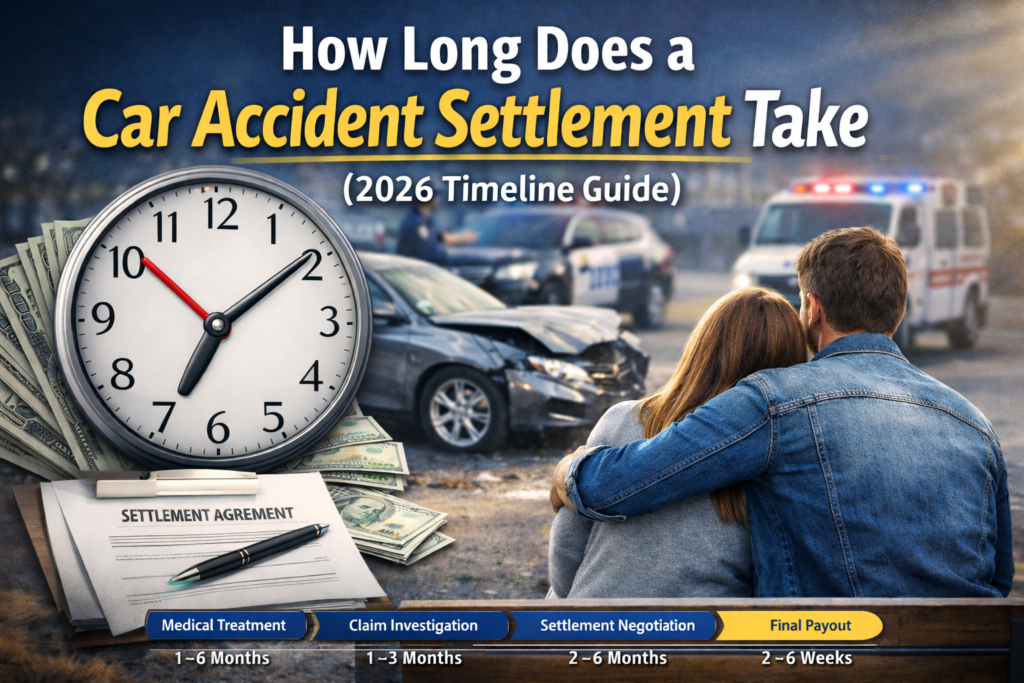
Q: How long does a slip and fall settlement take in 2026? A: Simple cases with clear liability may settle in 3 to 6 months. Complex cases involving serious injuries or disputed liability may take 1 to 3 years. Cases that go to trial can take longer.
Q: Can I sue a store for a slip and fall? A: Yes. Retail stores have a legal duty to maintain safe premises. If a store’s negligence caused your fall — such as failing to clean up a spill or failing to post warning signs — you can sue for damages.
Q: What if I fell on a public sidewalk? A: Sidewalk liability depends on your city or county. In many areas, the adjacent property owner is responsible for sidewalk maintenance. Filing a claim against government entities involves special rules and very short deadlines.
Q: Does it matter if there was a wet floor sign? A: Yes. A properly placed wet floor sign can reduce or eliminate the property owner’s liability because it gives warning of the hazard. However, if the sign was in the wrong location or the hazard was unreasonably dangerous despite the warning, you may still have a valid claim.
Q: Can I get compensation if I fell at a friend’s house? A: Yes. Homeowners insurance typically covers slip and fall injuries on residential properties. Filing a claim does not mean suing your friend personally — the claim is against their insurance policy.
More Slip and Fall FAQs
Q: How is pain and suffering calculated in a slip and fall case? A: Insurers typically multiply your economic damages (medical bills plus lost wages) by a factor of 1.5 to 5, depending on injury severity. For example, $50,000 in economic damages with a 3x multiplier yields $150,000 for pain and suffering, bringing the total case value to $200,000.
Q: Do I need a lawyer for a minor slip and fall claim? A: For minor injuries with small medical bills and clear liability, you can often negotiate directly with the insurer. But if fault is disputed, you needed surgery, or the offer seems low, a free consultation with a personal injury attorney is strongly recommended.
Q: What is the average slip and fall settlement without a lawyer? A: Unrepresented claimants typically settle for $10,000 to $30,000 for moderate injuries. Industry data consistently shows that hiring an attorney increases settlements by 3 to 4 times on average, even after contingency fees are deducted.
Q: Can I still recover if the hazard was open and obvious? A: Possibly. Property owners often argue you should have avoided an obvious hazard, but many states still allow recovery — especially when the owner should have anticipated that people would encounter the danger anyway, such as a broken step on the only entrance stairway.
Related Settlement Guides
Explore our other 2026 settlement guides: How Much Is My Car Accident Settlement Worth in 2026, Truck Accident Settlement Amount Guide (USA 2026), Average Medical Malpractice Settlement by State, and Debt & Credit Settlement Calculator (2026 Guide).
Trusted resources: Learn more about your rights from Nolo’s guide to slip and fall accidents and the Insurance Information Institute’s overview of premises liability.
Q: What if I was injured at work? A: Workplace falls are typically covered by workers’ compensation insurance, which is a separate system from personal injury lawsuits. However, if a third party (not your employer) was responsible for the hazard, you may be able to file both a workers’ comp claim and a personal injury lawsuit.
Conclusion
Slip and fall settlement amounts in 2026 range from $10,000 for minor injuries to over $2 million for catastrophic cases. The key factors that determine your payout are the severity of your injuries, where the fall happened, how clearly the property owner was at fault, and how well you document your claim.
Key takeaways from this guide:
- Average slip and fall settlements range from $10,000 (minor) to $2,000,000+ (catastrophic)
- Document the hazard, get immediate medical care, and report the incident right away
- Never accept the first settlement offer — it is almost always too low
- Pain and suffering can equal or exceed your economic damages
- Comparative fault can significantly reduce your recovery — minimize your percentage of fault
- Consult a personal injury attorney for serious injury cases
Ready to find out what your slip and fall case is really worth?
👉 Use Our Free Settlement Calculator — Instant Estimate, No Signup Required
Disclaimer: This article is for informational purposes only and does not constitute legal advice. Slip and fall laws and settlement amounts vary by state and individual case facts. Consult a licensed personal injury attorney for advice specific to your situation.