Can You File an Insurance Claim Without a Police Report
You are standing on the shoulder of the road. The other driver is already talking about leaving, no officer ever showed up, and a sinking question hits you: can you file an insurance claim without a police report — or did the claim die the moment the police didn’t come? Here is the answer that matters most: yes, you can file. No state law and no standard auto insurance policy makes a police report a prerequisite for opening a claim.
That does not mean the missing report is irrelevant. A police report is a convenient, neutral, time-stamped account of what happened, and insurance adjusters love convenient documents. Without one, you simply have to build the same proof yourself — photographs, witness names, repair estimates, medical records, and a written account made while the memory is fresh. This guide explains when you are legally required to involve the police, how to file a strong claim without a report, what evidence carries the most weight, and how first-party and third-party claims differ in this situation.
The Short Answer: Yes — No Law or Policy Requires One
An insurance claim is a request you make to an insurer under the terms of a policy. Nothing in any state’s insurance code conditions that request on a police report existing. When you call your insurer — or the other driver’s insurer — to open a claim, the adjuster will ask whether a report was filed, but the claim still gets a claim number and an assigned adjuster either way.
What the missing report changes is the adjuster’s workload, not your eligibility. With a report, the adjuster leans on the officer’s summary of the scene, the parties, and any citations. Without one, the adjuster has to assemble that picture from your materials — which means the quality of what you submit directly shapes how smoothly the claim moves. The Insurance Information Institute’s guide to filing an auto insurance claim lists prompt notice, documentation, and cooperation as the core duties of a claimant. A police report appears nowhere on that list.
There is one related obligation to keep separate in your mind: while no insurer can demand a police report as the price of admission, many states do require you to report certain crashes to the police or the DMV yourself — and missing that deadline can cost you your license. The state-by-state table below covers those requirements.
Why So Many Claims End Up Without a Police Report
Twenty years ago, an officer responding to nearly every fender bender was the norm. That is no longer how most departments operate. Understanding why reports go missing helps you stop blaming yourself and start replacing the report.
The most common reason is simply that the police would not come. Many departments now have written policies against dispatching officers to property-damage-only crashes, especially during busy shifts, bad weather, or staffing shortages. Dispatchers will tell you to exchange information and file a report yourself. A 911 call still creates a timestamped record of your report, so calling is worth doing even when you are told no officer is available. And the answer to can you file an insurance claim without a police report stays yes in every one of these scenarios.
Other common scenarios include crashes on private property, like parking lots and garages, where some agencies decline jurisdiction; hit-and-runs where there is no other driver to document; single-vehicle accidents where the driver just wants to get the car towed; minor collisions where both drivers agree to handle it privately and one later changes their story; and delayed injuries — you felt fine at the scene, declined to wait for police, and woke up two days later unable to turn your neck.
None of these situations extinguishes your right to compensation. They only change the evidence package you need to assemble.
What a Police Report Actually Does — and Doesn’t Do
To replace a police report, it helps to know exactly what function it serves in a claim. A typical crash report contains the date, time, and location of the crash; the names, addresses, license numbers, and insurance details of the drivers; a narrative of how the officer believes the crash happened; a diagram of the scene; witness names; whether anyone was injured; and any traffic citations issued. For an adjuster, it is a one-stop summary — neutral on its face, written by a third party, and filed close in time to the event.
But a police report is far less powerful than most people assume. The officer almost never witnessed the crash. The narrative is usually a summary of what each driver told the officer at the scene — which means it can repeat the other driver’s version right alongside yours. Officers’ conclusions about fault are opinions, and in many states those opinions are inadmissible hearsay in court. Citations help, but a driver can be ticketed and still not be at fault for the crash, and vice versa.
Adjusters know all of this. A report makes their job easier, but it does not decide liability. Liability is decided by the evidence of what happened — physical damage, skid marks, traffic signals, witness accounts, video — and every one of those things can be gathered without an officer. When the report is missing, your job is to hand the adjuster the same raw material the officer would have collected, organized and dated. That is the practical meaning of can you file an insurance claim without a police report: yes, because liability follows evidence, not paperwork.
State-by-State Police Reporting Thresholds
Here is the critical distinction: while insurers cannot require a police report, your state can. Every state requires crashes involving injury or death to be reported to law enforcement. For property-damage-only crashes, each state sets a dollar threshold — cross it, and you must notify the police or file a written report with the DMV within the stated deadline, even if no officer came to the scene. Failing to do so can mean fines, license suspension, or both.
The table below reflects the reporting thresholds and self-report deadlines as commonly published by state DMVs and insurance regulators. Two states changed their laws recently: Florida raised its property-damage threshold from $500 to $2,000 effective October 1, 2026, and Oklahoma raised its threshold to $3,000 effective November 1, 2026. Thresholds do change — confirm the current figure with your state DMV before relying on any single source. Whatever your state’s threshold, the answer to can you file an insurance claim without a police report remains yes — the threshold governs your reporting duty, not your right to claim.
| State | When You Must Report the Crash | Self-Report Deadline |
|---|---|---|
| Alabama | Property damage of $250+ | 30 days |
| Alaska | Property damage of $2,000+ | 10 days |
| Arizona | Property damage of $2,000+ | Immediately |
| Arkansas | Property damage of $1,000+ | 30 days |
| California | Property damage of $1,000+ (SR-1 to DMV) | 10 days |
| Colorado | Property damage of $1,000+ | 60 days |
| Connecticut | Property damage of $1,000+ | 5 days |
| Delaware | Property damage of $2,000+ | Immediately |
| District of Columbia | Property damage of $250+ | 5 days |
| Florida | Property damage of $2,000+ (raised from $500 on Oct. 1, 2026) | 10 days |
| Georgia | Property damage of $500+ | Immediately |
| Hawaii | Property damage of $3,000+ | Immediately |
| Idaho | Property damage of $1,500+ | Immediately |
| Illinois | Property damage of $1,500+ ($500+ if any driver uninsured) | 10 days |
| Indiana | Property damage of $1,000+ | Immediately |
| Iowa | Property damage of $1,500+ | 3 days |
| Kansas | Property damage of $1,000+ | Immediately |
| Kentucky | Property damage of $500+ | 10 days |
| Louisiana | Property damage of $500+ | Immediately |
| Maine | Property damage of $2,000+ | Immediately |
| Maryland | All crashes (no dollar threshold) | 15 days |
| Massachusetts | Property damage of $1,000+ | 5 days |
| Michigan | Property damage of $1,000+ | Immediately |
| Minnesota | Property damage of $1,000+ | 10 days |
| Mississippi | Property damage of $500+ | 10 days |
| Missouri | Property damage of $500+ | 30 days |
| Montana | Property damage of $1,000+ | 10 days |
| Nebraska | Property damage of $1,500+ | 10 days |
| Nevada | Property damage of $750+ | 10 days |
| New Hampshire | Property damage of $1,000+ | 15 days |
| New Jersey | Property damage of $500+ | 10 days |
| New Mexico | Property damage of $500+ | Immediately |
| New York | Property damage of $1,000+ | 10 days |
| North Carolina | Property damage of $1,000+ | Immediately |
| North Dakota | Property damage of $4,000+ | Immediately |
| Ohio | Property damage of $1,000+ | 2 days |
| Oklahoma | Property damage of $300+ ($3,000+ effective Nov. 1, 2026) | 6 months (property damage) |
| Oregon | Property damage of $2,500+ | 72 hours |
| Pennsylvania | Injury, death, or vehicle disabled (no dollar threshold) | 5 days |
| Rhode Island | Property damage of $1,000+ | 21 days |
| South Carolina | Property damage of $1,000+ | 15 days |
| South Dakota | $1,000+ to one person’s property, or $2,000+ total | Immediately |
| Tennessee | Property damage of $1,500+ | 20 days |
| Texas | Property damage of $1,000+ | 10 days |
| Utah | Property damage of $2,500+ | 10 days |
| Vermont | Property damage of $3,000+ | 3 days |
| Virginia | Property damage of $1,500+ | 24 hours |
| Washington | Property damage of $1,000+ | 4 days |
| West Virginia | Property damage of $1,000+ | Immediately |
| Wisconsin | Property damage of $1,000+ | Immediately |
| Wyoming | Property damage of $1,000+ | Immediately |
Three notes on using this table. First, injury or death always triggers the reporting duty in every state — the dollar thresholds above apply to property-damage-only crashes. Second, do not try to price the damage at the roadside.
Modern bumpers hide sensors, cameras, and brackets; a scratch that looks like a $400 repair can become a $3,000 estimate once the bumper cover comes off. When in doubt, report. Third, “immediately” generally means notifying law enforcement at or near the time of the crash — if officers decline to respond, file the written self-report with the DMV by the same deadline instead. Meeting these duties keeps the question of can you file an insurance claim without a police report purely about evidence, not compliance.
First-Party vs. Third-Party Claims: Can You File an Insurance Claim Without a Police Report
The absence of a police report plays out differently depending on whose insurance you are claiming against. The two paths — first-party and third-party — have different legal relationships, different duties, and different pressure points when the report is missing.
First-Party Claims: Filing With Your Own Insurer
A first-party claim is a claim under your own policy: collision coverage for your vehicle, personal injury protection or medical payments for your injuries, or uninsured/underinsured motorist coverage when the other driver fled or has no insurance. Your insurer owes you contractual duties — it must investigate your claim fairly, communicate with you, and pay what the policy covers. That contractual relationship is another reason can you file an insurance claim without a police report is answered most easily on the first-party side.
- Your policy cannot require a police report as a condition of filing. Standard auto policies require prompt notice of the accident and your cooperation with the investigation — statements, inspections, medical authorizations — but none require a police report to open the file.
- The duty of good faith runs in your favor. Because you are the insurer’s own customer, most states impose a duty of good faith and fair dealing on how your claim is handled. An adjuster who stalls or lowballs you solely because no report exists is on thinner ice here than anywhere else.
- Uninsured motorist and hit-and-run claims are the exception to watch. Many policies and some state laws require a police report — or at least a prompt report to the police — for hit-and-run or uninsured motorist claims specifically. If your crash involves a phantom vehicle, reporting to the police quickly is not optional. Our guide to hit-and-run accident claims explains how these cases work.
- Documentation replaces the report. Your repair estimate, photos, medical records, and your own written account become the claim file. Because your insurer already has a relationship with you, adjusters tend to be more willing to work from your materials here than in a third-party setting.
Third-Party Claims: Filing Against the Other Driver’s Insurer
A third-party claim is a claim against the at-fault driver’s liability coverage — you are asking someone else’s insurer to pay for what their policyholder did. That insurer owes you no contract and no duty of good faith in most states; its loyalty runs to its own policyholder. This is where a missing police report is felt most sharply, because the adjuster starts from a position of skepticism. This skepticism is why can you file an insurance claim without a police report is a harder fight on the third-party side — and why neutral evidence matters most here.
- The burden of proving fault sits entirely on you. The other driver’s insurer has no obligation to take your word for what happened. Without a report, you must present a coherent, documented account: where each vehicle was, who had the right of way, what the damage shows, and who saw it.
- Expect the “he-said, she-said” defense. The most common adjuster response to a report-less claim is that liability is disputed because both drivers blame each other. Neutral evidence — witnesses, video, physical damage patterns — is what breaks that deadlock. If you are preparing this kind of claim, read our walkthrough of how to file a claim with the at-fault driver’s insurance company before you make the first call.
- Recorded statements carry more weight — and more risk. Without a report, your recorded statement may become the adjuster’s primary narrative source. Give the facts calmly and briefly, stick to what you personally observed, and never speculate about speed, distances, or fault. Anything you guess at becomes part of the record.
- Delays are a tactic, not an accident. A third-party adjuster who keeps asking for “one more document” while months pass may be testing whether you will give up or accept less. States set deadlines for how insurers must handle claims; our guide on how long an insurance company has to settle a claim lays out what those timelines look like.
Key Differences at a Glance
- Relationship: first-party — you are the customer, and the insurer owes you contractual duties; third-party — you are a stranger to the contract, and the insurer’s duty runs to its policyholder.
- Good faith protection: first-party — most states impose a duty of good faith, giving you leverage against unfair handling; third-party — usually no good faith duty owed to you directly.
- How the missing report hurts: first-party — mainly slows the investigation; third-party — becomes a reason to dispute liability and discount your account.
- What replaces the report: first-party — your documentation plus the insurer’s own inspection of your vehicle; third-party — neutral third-party evidence (witnesses, video, damage analysis) matters far more.
- Denial risk: first-party — denials usually turn on coverage questions (was the loss covered?); third-party — denials usually turn on liability questions (did our driver cause this?).
- Best fallback: first-party — your state’s insurance department complaint process, backed by the good faith duty; third-party — filing under your own collision or UM coverage and letting your insurer pursue the other driver.
Evidence-Priority Checklist: What to Collect When There’s No Police Report
Not all evidence is equal. When there is no officer’s report to anchor the claim, adjusters and attorneys rank what you provide by how neutral, how timely, and how hard it is to fake. Collect in this order. Follow this priority order and the question of can you file an insurance claim without a police report answers itself: with this evidence, yes.
Priority 1: Scene Evidence — Collect Immediately
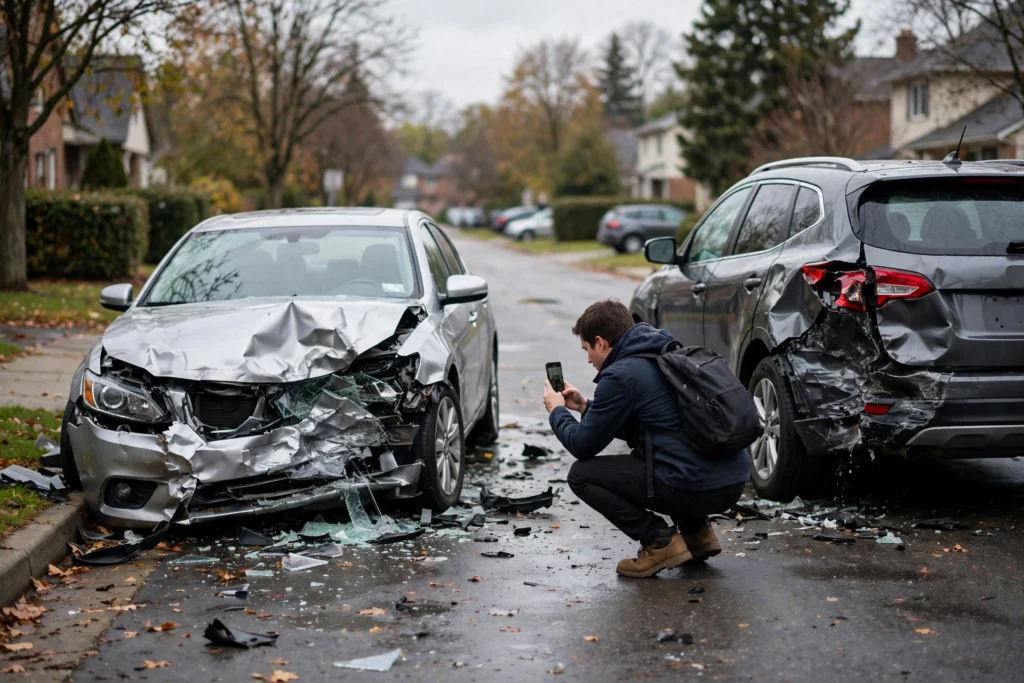
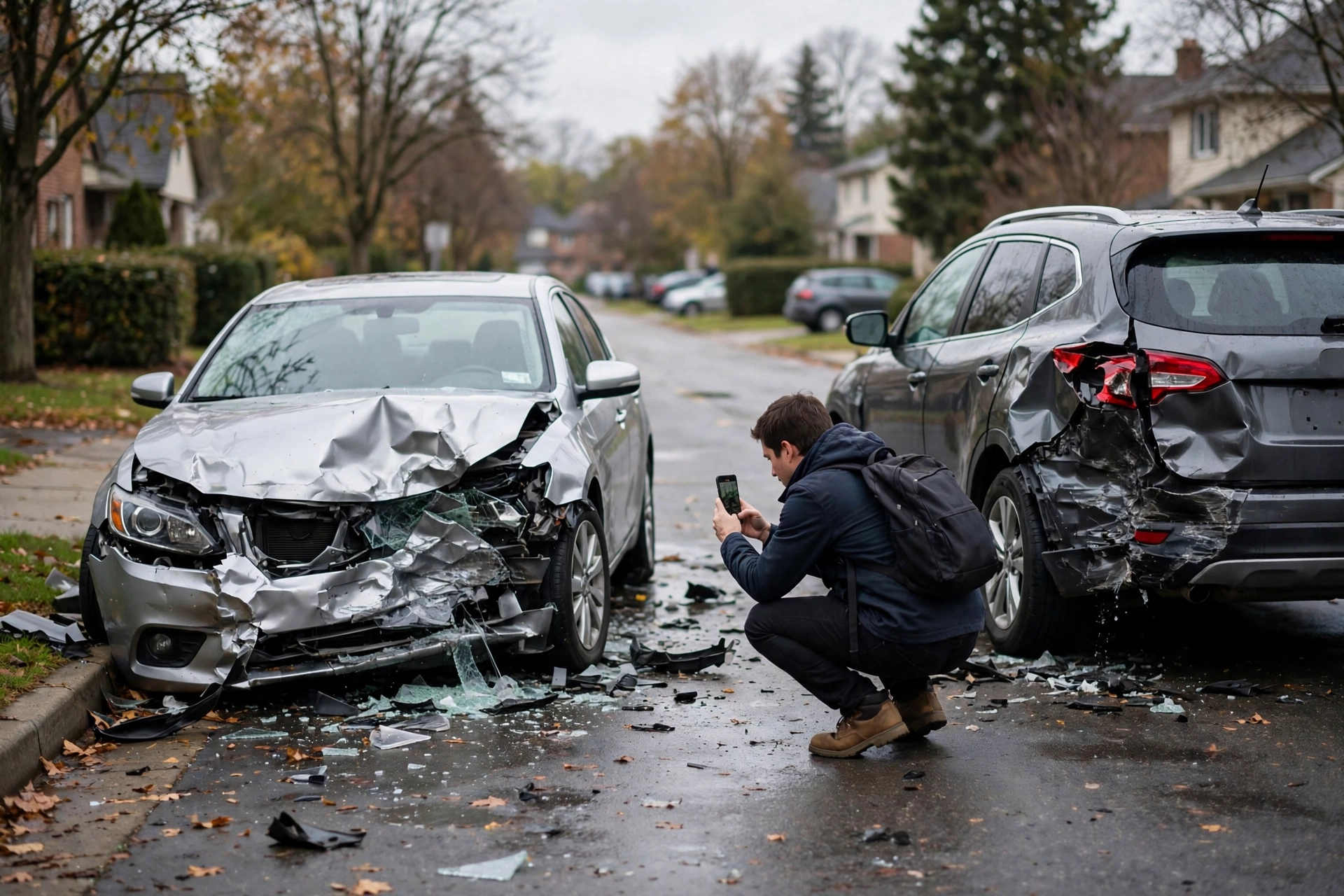
- Photographs and video of everything. Both vehicles from multiple angles, close-ups of every point of damage, the full scene showing lane positions, traffic signals and signs, skid marks, debris fields, road conditions, and weather. Take wide shots first, then details. Video walkthroughs with narration are even better.
- The other driver’s information. Full name, phone number, address, driver’s license number, license plate, and insurance company plus policy number. Photograph their license, registration, and insurance card directly — transcription errors are common under stress.
- Witness names and phone numbers. Independent witnesses are the single most powerful substitute for a police report. Ask bystanders, other drivers who stopped, and nearby pedestrians. Get a phone number on the spot; people who say “I saw everything” are unreachable a week later.
- Your own written account, same day. Write down what happened while it is fresh: direction of travel, speed, lane position, what you saw the other vehicle do, the sequence of impact, and what was said afterward. Date it. A contemporaneous account written before any dispute arose carries real credibility.
- Surveillance and dashcam leads. Note every camera that might have caught the crash — your dashcam, the other driver’s, nearby businesses, homes with doorbell cameras, traffic cameras. Footage is routinely overwritten within days, so identify sources now and request preservation in writing immediately.
Priority 2: Official and Third-Party Records — Gather Within Days
- A late or self-filed report. You can still create an official paper trail after the fact. Most states let you file a crash report at the police station or online days after the event, and many require a written DMV report by the deadlines in the table above. A late report is weaker than a scene report but far stronger than none.
- The 911 call record. If you called 911 — even if no officer was dispatched — request the call audio or the computer-aided dispatch log. It proves you reported the crash promptly and fixes the time and place in an official record.
- Repair estimates and the insurer’s inspection. Get a written estimate from a reputable shop, and make sure the adjuster actually inspects the vehicle rather than estimating from photos. Damage patterns tell a story about angles and force that supports your account of how the crash happened.
- Event data recorder (EDR) information. Most modern vehicles record seconds of pre-crash data — speed, braking, steering, seatbelt use. This “black box” data is objective and difficult to dispute. The NHTSA’s page on event data recorders explains what these devices capture. Preserve the vehicle and request the data before the car is repaired or totaled out.
- Medical records from the first visit. If you are hurt, get examined promptly and make sure the crash is mentioned in the intake notes. A medical record created days after the crash, describing injuries consistent with it, is powerful corroboration. Gaps in treatment are the first thing adjusters attack, so follow through on referrals.
Priority 3: Ongoing Documentation — Maintain Throughout the Claim
- A symptom and expense journal. Log pain levels, missed work, appointments, mileage to medical visits, and out-of-pocket costs. Contemporaneous notes beat reconstructed memories when an adjuster questions your damages months later.
- All correspondence in writing. Confirm every phone conversation with the adjuster in a follow-up email summarizing what was said. Keep copies of every letter, estimate, and medical bill you send. If a dispute arises later, the paper trail decides it.
- Wage loss documentation. A letter from your employer confirming dates missed and your rate of pay, or tax records if you are self-employed. Lost income is one of the largest components of many claims and one of the most frequently underpaid.
- Photos of injuries over time. Bruises, swelling, stitches, casts, and scars should be photographed at intervals as they heal. Visible injury progression corroborates both the severity of the crash and the timeline of your recovery.
How to File the Claim: Step by Step
With your evidence assembled, the answer to can you file an insurance claim without a police report becomes a practical plan. Follow these steps in order.
Step 1: Notify the insurer promptly. Call your own insurer first, even if you plan to pursue the other driver’s policy — most policies require prompt notice, and your insurer can advise you on coverage you may not know you have. Then notify the at-fault driver’s insurer to open the third-party claim. Give only the basic facts: when and where it happened, the vehicles involved, and that you are opening a claim. Save the claim number and the adjuster’s direct contact information.
Step 2: Submit your evidence package. Do not dribble documents out over weeks. Send the adjuster an organized package — your written account, photos, witness contacts, repair estimate, and medical records to date — with a cover note listing what is enclosed. The National Association of Insurance Commissioners’ consumer guide to filing an auto claim recommends keeping copies of everything you submit, which is doubly important when there is no police report to fall back on.
Step 3: Cooperate — but protect yourself. You must cooperate with your own insurer’s investigation; that is a policy duty. With the other driver’s insurer, be polite and factual but measured. Do not give a recorded statement to the other insurer without understanding the risks, do not sign medical authorizations broader than the crash-related treatment, and never accept a quick settlement before you know the full extent of your injuries and damages.
Step 4: Document the adjuster’s handling. Note the dates of every contact, what was promised, and what was delivered. If weeks pass with no liability decision, ask for the decision in writing with reasons. This record becomes essential if you later need to complain to the state insurance department or consult an attorney.
Step 5: Negotiate from evidence, not frustration. When the settlement discussion begins, anchor every number to documentation: the repair estimate, the medical bills, the wage letter, the journal. Adjusters respond to organized files, not to anger. Our guide to negotiating with an insurance adjuster after a car accident walks through the tactics adjusters use and how to counter them.
When the Insurer Pushes Back
A missing police report gives a reluctant adjuster cover for three classic moves: disputing liability (“we have no independent confirmation of how this happened”), delaying the investigation (“we’re still gathering information”), and discounting damages (“your injuries don’t match a crash of this severity”). Recognize these for what they are — negotiation positions, not final answers. Each of these moves assumes you do not know that can you file an insurance claim without a police report — and win.
Counter each one with the evidence hierarchy above. Liability disputes fall to neutral evidence: witnesses, video, EDR data, damage analysis. Delays fall to the written record: your dated submissions and the insurer’s own claim-handling deadlines under your state’s unfair claims practices law. Damage discounts fall to medical documentation and consistent treatment records.
If your own insurer is the problem — ignoring your submissions, denying without investigation, or making settlement conditional on documents the policy doesn’t require — that may cross into bad faith. Learn the warning signs in our guide to bad faith insurance practices and how to fight back. And remember that every state insurance department accepts consumer complaints; regulators take a documented pattern of unreasonable delay seriously, and a complaint costs you nothing to file. Knowing that can you file an insurance claim without a police report gives you the standing to push back with complaints and counsel.
Key Takeaway
Yes — you can file an insurance claim without a police report, and the absence of one has never, by itself, been a lawful reason to deny your claim. What the missing report costs you is convenience, not eligibility: you must assemble the proof the officer would have gathered — scene photos, witness contacts, a same-day written account, repair estimates, and medical records — and present it as an organized package.
File any state-required crash report by the deadline in the table above, understand whether you are making a first-party or third-party claim, and keep every communication in writing. Do that, and a missing police report becomes an inconvenience in your file, not the end of your claim. The next time someone asks can you file an insurance claim without a police report, you will know the answer — and exactly how to do it.
Frequently Asked Questions
Can you file an insurance claim without a police report?
Yes. No state law and no standard auto insurance policy requires a police report to open a claim. You can file with your own insurer or the other driver’s insurer by providing notice of the crash and supporting evidence. The claim may take more work to prove, but the right to file is not affected by the missing report.
Will my claim be denied just because there is no police report?
Not lawfully on that basis alone. Insurers can dispute liability or the extent of your damages, and a missing report makes those disputes more likely — but “no police report” is not a valid standalone reason to deny a covered claim. If an adjuster tells you otherwise, ask for the denial in writing and consider filing a complaint with your state insurance department. Remember: can you file an insurance claim without a police report is a settled yes; denials must rest on coverage or liability, not missing paperwork.
What should I do if the police refused to come to the accident scene?
Call 911 anyway so there is a timestamped record of your report, then exchange information with the other driver, photograph everything, and collect witness contacts yourself. Afterward, check whether your state requires you to file a written crash report with the DMV by a deadline — many do, even when officers decline to respond. You can also file a counter report at the police station.
Can I file a police report after the accident happened?
In most cases, yes. You can typically file a late or walk-in crash report at the police station or through an online portal days or even weeks after the event. A late report carries less weight than one written at the scene, but it still creates an official, dated record of your version of events — which is far better than having no record at all.
Is a police report required for a hit-and-run insurance claim?
Often, effectively yes. While you can always open the claim, many auto policies and some state laws specifically require a prompt police report for hit-and-run or uninsured motorist claims. If the other driver fled, reporting to the police immediately is one of the most important steps you can take — delay can give the insurer grounds to deny that portion of the claim.
Does a police report determine who was at fault?
No. A police report is the responding officer’s summary, usually based on what the drivers said at the scene — the officer rarely witnessed the crash. Fault is determined by the evidence: damage patterns, witness statements, video, traffic laws, and physical facts. An officer’s opinion about fault is even inadmissible as evidence in court in many states.
How long do I have to file an insurance claim without a police report?
The same deadlines apply as with a report: your policy requires prompt notice (usually days, not weeks), and your state’s statute of limitations sets the ultimate deadline for filing a lawsuit, commonly two to three years for injury claims. The missing report does not extend any deadline — if anything, it makes acting quickly more important, because evidence like video and witness memories fade fast.
What evidence matters most when there is no police report?
Neutral, contemporaneous evidence ranks highest: independent witness statements, dashcam or surveillance video, photographs of the scene and damage, event data recorder information, and a written account you made the same day. Medical records created promptly after the crash and repair estimates from reputable shops round out the package. One strong neutral piece of evidence outweighs pages of argument. Assemble this package and can you file an insurance claim without a police report stops being a worry.
Can I file a claim on my own insurance without a police report?
Yes. First-party claims — collision, comprehensive, medical payments, PIP, and uninsured motorist coverage — do not require a police report under standard policy language. Your insurer must still investigate fairly and in good faith. The main exception is hit-and-run or phantom-vehicle claims under uninsured motorist coverage, where many policies do require a police report. So can you file an insurance claim without a police report on your own policy? Absolutely.
Do I need a lawyer if I don’t have a police report?
Not always, but the missing report is a genuine reason to consider one. Property-damage-only claims with clear evidence are often handled fine without counsel. If injuries are involved, liability is disputed, or the adjuster is using the missing report to stall or lowball you, a personal injury attorney — usually available on contingency with no upfront fee — can build the evidence case and apply the pressure that moves a stalled claim.
Disclaimer: This article provides general information for educational purposes only and is not legal advice. Car accident reporting rules, insurance claim requirements, and filing deadlines vary significantly from state to state, and the right strategy depends on the specific facts of your situation. For guidance about your specific situation, consult a licensed attorney in your state.