
Average Settlement for a Hit and Run Accident in the USA (2026 Guide)
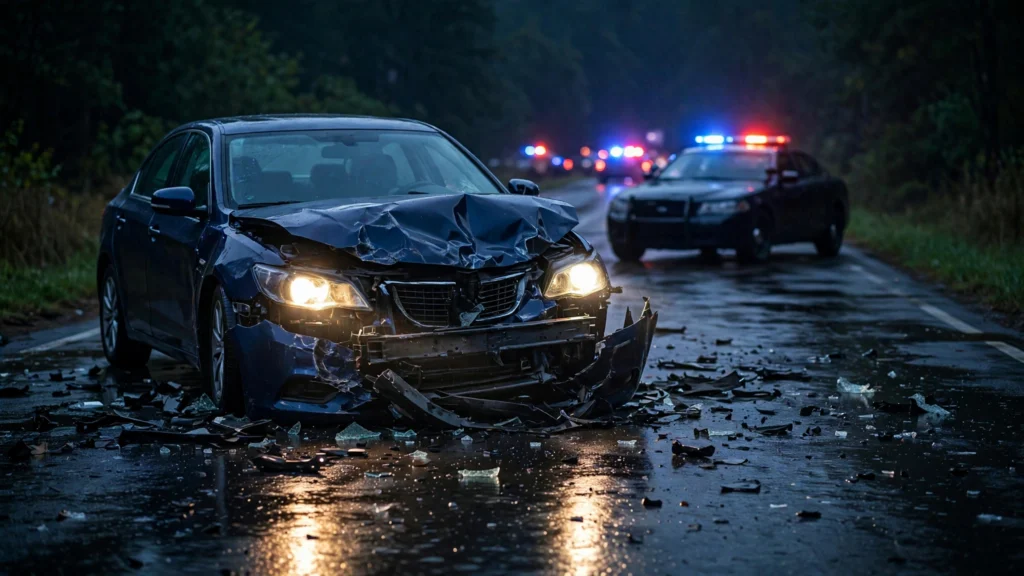
You are standing on the shoulder of the road, shaking, staring at the taillights disappearing into the distance. The driver who hit you is gone — no name, no insurance card, no apology. Your car is damaged, you might be hurt, and one question keeps looping in your mind: is anyone going to pay for this? If you are researching the average settlement for hit and run accident cases, you are asking exactly the right question, and this guide will walk you through honest answers.
Here is the truth up front: there is no single official “average” for hit-and-run settlements in the United States, because most case outcomes are confidential and every claim is shaped by its own injuries, evidence, and insurance coverage. But personal injury attorneys and insurance analysts consistently report that hit-and-run claims typically resolve in the same ballpark as comparable car accident claims — commonly between $10,000 and $75,000 for moderate cases, and far higher when injuries are serious or the fleeing driver is identified. In this 2026 guide, you will learn what those ranges look like by scenario, how your own insurance can pay even when the driver is never found, and exactly what to do to protect the value of your claim.
Why Hit-and-Run Settlements Work Differently
A standard car accident claim has a simple shape: the at-fault driver’s insurance pays the victim. A hit-and-run claim breaks that shape in half. Understanding how the pieces reassemble is the key to understanding what your case might be worth.
The Missing At-Fault Driver
In most states, leaving the scene of a crash involving injury or significant property damage is a crime — often a felony when someone is seriously hurt or killed. The National Highway Traffic Safety Administration tracks hit-and-run crashes as part of its national traffic safety data, and every state requires drivers to stop, exchange information, and render aid after a crash. But criminal law and your compensation are two separate tracks. Even if police catch the driver and prosecutors file charges, the criminal case does not pay your medical bills. Your civil claim — your settlement — is what covers your losses, and it has to be aimed at someone who can actually pay.
When the driver is never identified, the “someone” is usually your own insurance company, through uninsured motorist coverage. When the driver is found later, your claim can target their liability insurance, their personal assets, and in some cases punitive damages for fleeing. That fork in the road — identified versus unidentified — is the single biggest structural factor in what your case settles for.
Your Own Policy Becomes the Claim
This surprises many victims: in a hit-and-run, you may end up “suing” your own insurer. That is not a betrayal or a loophole — it is exactly what uninsured motorist (UM) coverage exists for. The Insurance Information Institute describes UM coverage as protection for you when the at-fault party cannot pay, and hit-and-run drivers who vanish are the textbook example.
Filing a UM claim does not mean you were at fault, and in most states it should not raise your premiums the way an at-fault claim would. Your insurer steps into the shoes of the missing driver and pays what that driver would have owed you, up to your policy limits. This is why knowing how much your car accident settlement is worth starts with understanding your own coverage, not the other driver’s.
Average Settlement Ranges by Scenario (2026)
Because no government agency publishes an official average, the ranges below reflect the settlement bands most commonly reported by personal injury attorneys and insurance professionals for hit-and-run cases. Treat them as realistic estimates for planning — not guarantees — because your outcome depends on the factors in the next section.
| Scenario | Commonly reported settlement range | Typical recovery source |
|---|---|---|
| Minor injuries (whiplash, bruises, sprains), driver never identified | $10,000 – $30,000 | Your uninsured motorist (UM) bodily injury coverage |
| Moderate injuries (fractures, concussion, torn ligaments), driver never identified | $30,000 – $75,000 | Your UM coverage, possibly stacked with MedPay |
| Serious injuries (surgery, hospitalization, lasting impairment), driver never identified | $75,000 – $200,000+ | Your UM/UIM limits, plus any umbrella coverage |
| Any injury level, driver identified and insured | $50,000 – $500,000+ | At-fault driver’s liability policy; punitive damages possible |
| Driver identified but uninsured or underinsured | Capped at your UM/UIM limits | Your UM/UIM coverage, plus potential suit against driver’s assets |
| Property damage only, no injuries | Actual repair costs (often $2,000 – $15,000) | Collision coverage or UM property damage where your state allows |
Notice the pattern: the average settlement for hit and run accident claims is driven less by the crash itself and more by whose policy is paying. Two victims with identical injuries can recover very different amounts simply because one carried $100,000 in UM coverage and the other carried the state minimum.
What Determines Your Hit-and-Run Settlement Value
Settlement negotiations — whether with your own insurer or the at-fault driver’s — turn on the same core factors that drive any injury claim, plus a few that are unique to hit-and-runs.
The Severity and Type of Your Injuries
This is the dominant factor in every injury case. Soft-tissue injuries like whiplash and bruising that resolve in weeks settle at the lower end. Injuries requiring imaging, injections, or surgery settle higher because they generate documented medical costs and a longer recovery. Catastrophic injuries — traumatic brain injury, spinal cord damage, permanent disability — command the highest settlements because they create lifetime costs: future surgeries, rehabilitation, lost earning capacity, and profound changes to daily life.
What matters is not only the diagnosis but the documentation. Emergency room records from the day of the crash, consistent follow-up treatment, and specialist notes create a paper trail that insurers cannot easily dismiss. Gaps in treatment — waiting weeks before seeing a doctor — give adjusters room to argue your injuries were minor or unrelated, and that argument costs real money.
The Insurance Coverage Available
In a hit-and-run where the driver is never found, your UM policy limit is the practical ceiling on your bodily injury recovery. If you carry $25,000 in UM coverage and your damages total $100,000, your UM claim generally cannot exceed $25,000 — though MedPay, health insurance, and underinsured motorist coverage can add layers. This is why attorneys constantly urge drivers to carry UM limits that match their liability limits: the coverage is inexpensive, and it is the coverage that pays when a stranger hits you and vanishes.
If the driver is identified, the ceiling shifts to their liability limits — which may be higher, lower, or nonexistent if they were uninsured. An identified driver with a $100,000 policy and serious injuries against them can produce a policy-limits settlement. An identified driver with minimum limits and no assets leaves you back at your own UM coverage.
Whether the Driver Is Identified
Identification changes the legal landscape dramatically. A known at-fault driver can be sued personally, their insurer can be negotiated with directly, and many states allow punitive damages when a driver flees an injury crash — damages meant to punish reckless behavior, which can substantially increase a verdict or settlement. Police reports, traffic cameras, dashcam footage, and witness statements are what turn an unidentified-driver claim into an identified-driver case, so preserving evidence early is one of the highest-value things you can do.
That said, identification is not a guarantee of more money. A driver who fled because they had no insurance and no assets may add little to your recovery beyond what your UM coverage already provides. The realistic question is always: who can pay, and how much?
The Strength of Your Evidence
Hit-and-run claims live or die on proof that the crash happened the way you say it did. A police report filed the same day is the foundation — it timestamps the event, records your account, and documents the scene. Photos of vehicle damage, your injuries, skid marks, and debris corroborate your story. Witness names and phone numbers, 911 call logs, and nearby surveillance footage can be decisive, especially in states that require independent corroboration for unidentified-driver UM claims.
Some states impose strict requirements for these claims. About half of states require physical contact between the unidentified vehicle and yours before UM bodily injury coverage applies; in others, an independent witness can satisfy the requirement. Check your policy language and your state’s rules quickly — missing a reporting deadline, which in some states can be as short as 72 hours, can end a claim before it begins.
How Uninsured Motorist Coverage Pays Hit-and-Run Claims
Because UM coverage is the workhorse of hit-and-run recovery, it deserves a clear explanation. Many drivers pay for it for years without understanding what it actually does.
What UM Coverage Actually Covers
Uninsured motorist coverage typically comes in two parts: UM bodily injury (UMBI), which pays for your medical bills, lost wages, and pain and suffering when an uninsured or unidentified driver injers you; and UM property damage (UMPD), which pays for vehicle repairs. In most states, insurers must offer UM coverage, and in some states you must carry it unless you reject it in writing. Many drivers do not realize they have it until they need it — so pulling out your declarations page today is one of the smartest things you can do.
UM coverage also usually protects you as a pedestrian or cyclist hit by a fleeing driver, and it often covers household family members. It does not cover the at-fault driver, it does not pay for intentional acts by you, and it is capped at the limits you selected. If you are unsure what you carry, call your agent and ask for your UM bodily injury and UM property damage limits in writing.
Filing a UM Claim, Step by Step
First, report the crash to police immediately and get a report number — your insurer will almost certainly require it. Second, notify your own insurance company promptly; most policies require prompt notice, and some states set hard deadlines for hit-and-run reports. Third, seek medical care right away and keep every record, bill, and receipt. Fourth, document everything: photos, witness contacts, repair estimates, and a written account of what you remember about the fleeing vehicle.
Fifth, do not give a recorded statement to your insurer’s adjuster before you understand the full extent of your injuries — you can provide basic facts in writing while reserving detail. Sixth, keep a daily log of your pain, limitations, missed work, and out-of-pocket costs. When you know how to negotiate with an insurance adjuster, you will recognize that even your own insurer’s first offer is a starting point, not a final answer.
What If You Do Not Have UM Coverage?
Your options narrow but do not disappear. Collision coverage can pay for your vehicle repairs regardless of who caused the crash (minus your deductible). Medical payments (MedPay) coverage, if you carry it, pays medical bills no matter who was at fault. Your health insurance covers treatment, though it may place a lien on any recovery. And if police identify the driver, you can pursue their liability insurance or personal assets directly.
If none of those paths exist — no UM, no collision, no identified driver — recovery becomes genuinely difficult, and this is the scenario behind the rare near-zero outcomes. It is also the strongest argument for reviewing your policy now, before you ever need it. Our guide on what to do when an uninsured driver hits your car walks through these backup options in more detail.
What to Do After a Hit-and-Run to Protect Your Claim
The hours after a hit-and-run are disorienting, but the steps you take now directly shape what your claim is worth later. Print this section mentally — it matters more than any other.
At the Scene
Call 911 immediately and make clear it was a hit-and-run. Give dispatch every detail you can about the fleeing vehicle: make, model, color, partial plate, direction of travel, and any description of the driver. Do not chase the driver — it is dangerous and can complicate your claim. If you are hurt, request paramedics and try not to move more than necessary.
While you wait, photograph everything: your vehicle’s damage, the other lane’s debris, skid marks, your visible injuries, and the surrounding area including any cameras on nearby businesses. Ask witnesses for their names and phone numbers before they leave. Write down the date, time, exact location, and your memory of events while it is fresh. For a full timeline of these critical hours, see our guide on what to do in the first 24 hours after a car accident.
In the Days After
Get a medical evaluation within 24 hours even if you feel fine — adrenaline masks injuries like concussions, whiplash, and internal trauma, and delayed treatment weakens both your health outcome and your claim. Obtain a copy of the police report and the 911 call log. Notify your insurer and open the claim, but keep your initial statement factual and brief.
Follow up on evidence fast: ask nearby businesses for surveillance footage before it is overwritten (many systems recycle within days), and check whether traffic cameras covered the intersection. Keep every medical bill, prescription receipt, repair estimate, and pay stub showing missed work. And be careful on social media — insurers do look, and a photo of you carrying groceries can be used to argue your back injury is exaggerated.
How Hit-and-Run Settlements Are Actually Calculated
There is no official formula, but adjusters and attorneys commonly start from the same building blocks. Economic damages are the countable losses: emergency care, surgeries, physical therapy, prescriptions, future medical treatment, vehicle repairs, rental cars, lost wages, and reduced earning capacity. These are added up from bills and records.
Non-economic damages — pain and suffering, emotional distress, anxiety, sleep disruption, and loss of enjoyment of life — are harder to count. A widely used starting method multiplies your economic damages by a factor, often between 1.5 and 5, chosen according to injury severity: a sprain that heals in a month might use a low multiplier, while a surgery with permanent limitation uses a high one. This “multiplier method” is a negotiation starting point, not a rule — insurers routinely argue it down, and strong documentation pushes it up.
Two adjustments then apply. First, policy limits cap the result: a $300,000 valuation against $50,000 in available coverage generally settles at or near $50,000. Second, comparative fault can reduce the total — if you were partially at fault in the crash, most states reduce your recovery by your percentage of fault. In hit-and-runs, fault disputes are less common (the fleeing driver is rarely sympathetic), but they can arise in multi-vehicle scenarios.
Common Mistakes That Shrink Hit-and-Run Settlements
Claims lose value in predictable ways. Avoid these and you protect thousands of dollars.
Waiting to call police. A report filed days later invites skepticism about whether the crash happened as described. Same-day reporting is the gold standard.
Skipping medical care. “I felt okay” followed by a doctor visit three weeks later is the adjuster’s favorite argument. Get checked the same day and follow the treatment plan.
Accepting the first offer. Early offers arrive before the full cost of your injuries is known. Once you sign a release, you cannot reopen the claim if complications emerge months later.
Talking too freely. Casual remarks to adjusters (“I’m feeling much better!”) and social media posts get quoted back at you. Be polite, be factual, and let documentation speak.
Missing deadlines. UM notice requirements, state reporting windows, and statutes of limitations are unforgiving. A claim filed one day late can be worth zero. When in doubt, act early.
Key Takeaway
The average settlement for hit and run accident claims is not a single number — it is a range shaped by your injuries, your evidence, and above all your insurance coverage. Most cases with moderate injuries resolve between $10,000 and $75,000 through uninsured motorist coverage when the driver is never found, while serious injuries or an identified, insured driver can push settlements into six figures. The two highest-leverage moves you can make are documenting everything in the first 24 hours and knowing your UM limits before you ever need them. If a driver hit you and fled, you still have rights — and in most cases, you still have a path to fair compensation.
Disclaimer: This article provides general information for educational purposes only and is not legal advice. Hit-and-run reporting requirements, uninsured motorist claim rules, physical-contact requirements, and filing deadlines vary significantly by state, and your policy language controls what coverage applies. For guidance about your specific situation, consult a licensed attorney in your state.
Frequently Asked Questions
What is the average settlement for a hit and run accident?
There is no official published average because most settlements are confidential. Personal injury attorneys commonly report ranges of $10,000 to $75,000 for moderate-injury hit-and-run claims paid through uninsured motorist coverage, with serious-injury cases reaching $200,000 or more and identified-driver cases sometimes exceeding $500,000. Your outcome depends on injury severity, available coverage, and whether the driver is found.
Can I get a settlement if the hit-and-run driver is never found?
Yes — this is one of the most common misunderstandings about hit-and-run crashes. Your own uninsured motorist (UM) bodily injury coverage is designed for exactly this situation: your insurer pays what the missing driver would have owed you, up to your policy limits. You will need a police report and prompt notice to your insurer, and some states require proof of physical contact with the unidentified vehicle.
Will filing a hit-and-run claim raise my insurance rates?
Usually not in the way an at-fault claim would. Because you did not cause the crash, most states and most insurers do not surcharge you for a not-at-fault UM claim, though rules vary by state and company. You may still owe your collision or UM property damage deductible for vehicle repairs. Ask your insurer directly how a not-at-fault hit-and-run claim affects your policy.
How long do I have to file a hit-and-run claim?
Two clocks run at once. Your insurance policy typically requires prompt notice — some states impose hit-and-run reporting deadlines as short as 72 hours for UM claims. Separately, your state’s statute of limitations for a personal injury lawsuit (commonly two to three years) sets the outer deadline. Because the shorter deadline can kill your claim first, report the crash to police and your insurer immediately.
What if the driver is found after I already filed a UM claim?
Your claim can shift to the at-fault driver’s liability insurance, and your insurer may seek reimbursement from the driver for what it already paid you (a process called subrogation). An identified driver also opens the door to a personal lawsuit and, in many states, punitive damages for fleeing the scene. Keep your UM claim moving while police investigate — do not wait for an arrest to start the process.
Does uninsured motorist coverage apply to hit-and-runs in every state?
In nearly every state, UM coverage treats an unidentified hit-and-run driver the same as an uninsured driver. However, about half of states impose a physical-contact requirement — your vehicle or body must have been struck — while others allow claims with independent witness corroboration even without contact. A few states also exclude UM property damage for unidentified drivers. Check your policy and your state’s department of insurance for the exact rules.
What evidence matters most in a hit-and-run settlement?
The police report is the foundation — file it the same day. Next most valuable: photos of vehicle damage and injuries, witness names and statements, 911 call records, and nearby surveillance or traffic-camera footage (request it within days before it is overwritten). Medical records linking your injuries to the crash date complete the picture. Together, this evidence proves the crash happened, shows its severity, and can help identify the fleeing driver.
Can I get pain and suffering damages in a hit-and-run claim?
Yes. UM bodily injury coverage pays the same categories of damages the at-fault driver would have owed, including pain and suffering, emotional distress, and loss of enjoyment of life — not just medical bills and lost wages. If the driver is identified and sued, pain and suffering plus potential punitive damages are also on the table. Documentation of how the injuries affected your daily life strengthens this part of your claim.
What happens if I was partially at fault in a hit-and-run?
You can generally still recover, but your settlement is reduced by your share of fault in most states — for example, 20% fault on a $50,000 claim leaves $40,000. A small number of states bar recovery entirely if you were mostly at fault. The fact that the other driver fled does not automatically erase questions about how the crash happened, so honest, consistent documentation of events matters.
Should I hire a lawyer for a hit-and-run claim?
For minor property-damage-only claims, you can often handle it yourself. For any injury claim — especially one involving your own insurer, disputed UM coverage, or an identified driver — a personal injury attorney usually pays for itself. Insurers, including your own, routinely undervalue UM claims, and attorneys work on contingency, meaning you pay nothing upfront. Most offer free consultations to evaluate your case.
