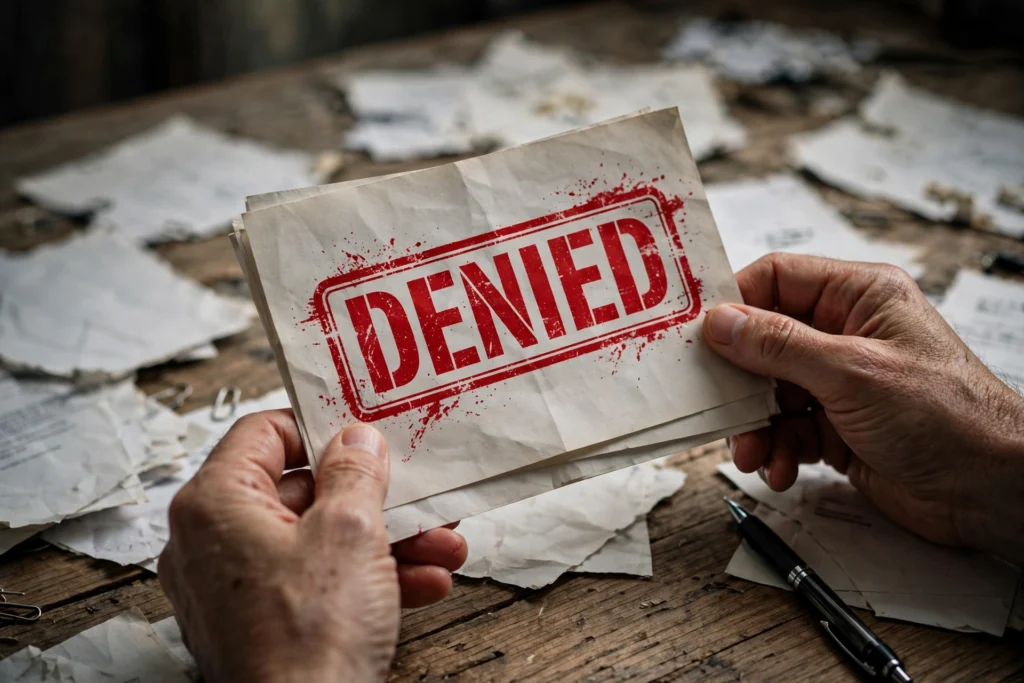
Few things are more frustrating than being injured through someone else’s fault, filing a claim in good faith, and receiving a letter saying your claim has been denied. Denials are common — insurance companies deny claims every day, sometimes for legitimate reasons and sometimes as a negotiation tactic. Understanding why denials happen and how the process works puts you in a far stronger position to fight back.
The Top Reasons Insurers Deny Injury Claims
1. Lapses or Delays in Medical Treatment
This is one of the most common reasons. If you waited weeks to see a doctor, skipped appointments, or stopped treatment and restarted months later, the insurer will argue your injuries weren’t serious — or weren’t caused by the accident at all. Adjusters treat gaps in treatment as evidence that you recovered or that something else caused your problems.
2. Pre-Existing Conditions
If you had prior injuries or medical conditions affecting the same body part, the insurer may claim your current pain is just the old condition, not something caused by the accident. They will comb through your medical history looking for anything they can point to.
3. Liability Disputes
The insurer may argue their policyholder wasn’t at fault — or that you were partially or fully responsible. In states with comparative fault rules, they may concede some liability but claim you share a large percentage of the blame, which reduces what they owe.
4. Missed Deadlines or Notice Requirements
Failing to report the accident promptly, missing policy notification deadlines, or filing after the statute of limitations can all trigger denials. Some policies require notice within a specific number of days.
5. Policy Exclusions
The at-fault party’s policy may exclude the specific situation — for example, injuries caused during certain commercial activities, intentional acts, or incidents involving excluded drivers. Coverage limits can also function like a denial if the damages far exceed the available policy.
6. Insufficient Evidence
Vague descriptions, no police report, no witnesses, minimal medical documentation — when the file is thin, adjusters deny. They are not obligated to build your case for you.
How Adjusters Actually Evaluate Claims
It helps to understand the mindset on the other side of the table. A claims adjuster’s job is to resolve claims for as little as the company can justify — they are evaluated on it. Their review typically follows a pattern:
- Coverage check: Is there an active policy, and does it cover this type of loss?
- Liability assessment: Who was at fault, and how clear is the evidence?
- Causation review: Do the medical records connect the injuries to this specific accident?
- Damages calculation: What are the documented medical costs, lost wages, and other losses?
- Credibility screening: Are there inconsistencies in your statements, social media posts, or surveillance that undermine the claim?
Many insurers also use claims software that assigns values based on data points like treatment type, duration, and diagnostic codes. These programs systematically undervalue claims that don’t fit neat patterns — which is why thorough documentation matters so much.
How to Appeal a Denied Claim: Step-by-Step
A denial is not the final word. Here’s a practical process for fighting back:
Step 1: Get the Denial in Writing and Understand It
Request a written explanation citing the specific policy language and facts behind the denial. Vague denials are harder for insurers to defend. Knowing the exact reason tells you what evidence you need to counter it.
Step 2: Review Your Policy
Read the relevant policy provisions yourself. Denials sometimes rest on misread exclusions or provisions that don’t actually apply to your facts.
Step 3: Gather Counter-Evidence
Build a file that directly addresses the stated reason:
- Treatment gap denial: Get your doctor to explain the gap in writing, gather records showing continuous symptoms, and document any reason for missed appointments.
- Pre-existing condition denial: Obtain a physician’s opinion distinguishing the new injury from the old condition — an aggravation of a prior condition is still compensable in most states.
- Liability dispute: Police reports, witness statements, photos, video footage, and accident reconstruction can all shift the fault analysis.
- Insufficient evidence: This is the easiest to fix — supply what’s missing.
Step 4: Write a Formal Appeal Letter
Submit a clear, professional appeal that identifies the claim, quotes the denial reason, presents your counter-evidence point by point, and states the resolution you’re seeking. Attach supporting documents. Send it in a way that creates proof of delivery.
Step 5: Escalate Within the Company
If the adjuster won’t budge, ask for a supervisor or the company’s internal appeals department. A fresh set of eyes sometimes produces a different result, especially when the initial denial was aggressive.
Step 6: Consider Outside Help
If the claim has significant value and the insurer won’t move, consulting a personal injury attorney is often the turning point. Insurers track which claimants have representation, and settlement behavior changes accordingly. Many attorneys work on contingency for injury claims.
Your Documentation Checklist
Strong documentation prevents most denials and defeats the rest. Keep:
- Police or incident report
- Photos of the scene, vehicles, and injuries
- Complete medical records from every provider
- Bills, receipts, and proof of out-of-pocket costs
- Pay stubs or employer letters documenting lost wages
- Witness names and contact information
- A personal journal of symptoms and daily limitations
- All correspondence with insurers (save everything in writing)
When a Denial May Be Bad Faith
Insurers have a legal duty to handle claims fairly and in good faith. A denial may cross the line into bad faith when the insurer:
- Denies a claim without any reasonable investigation
- Misrepresents policy language or the facts to justify a denial
- Unreasonably delays the investigation or decision
- Refuses to pay a claim it knows is valid
- Makes settlement offers far below what it knows the claim is worth as a pressure tactic
- Fails to communicate or provide required explanations
Bad faith is a serious allegation with serious consequences for insurers — in many states, it can expose the company to damages beyond the original claim, including attorney’s fees and punitive damages. If you suspect bad faith, document every interaction meticulously and get legal advice, because these cases are complex and the standards vary by state.
Key Takeaway
Claim denials are often the beginning of a negotiation, not the end of your rights. Most denials rest on a handful of predictable reasons — treatment gaps, pre-existing conditions, liability disputes, and thin evidence — and each has a practical counter. Respond in writing, build your evidence file, escalate through the company’s appeals process and your state insurance department, and recognize when a denial may constitute bad faith. Above all, document everything from day one: the claim you can prove is the claim you can win.
Disclaimer: This article provides general information for educational purposes only and is not legal advice. Insurance laws and bad faith standards vary by state. For guidance about your specific situation, consult a licensed attorney in your state.