Average Car Insurance Claim Payout Amount (USA 2026)
A Real Car Insurance Claim Story
In 2024, a driver in Texas was involved in what initially appeared to be a minor rear-end collision. Both vehicles were traveling under 30 mph and the damage seemed relatively small. However, within days the driver began experiencing neck pain and required medical treatment.
What started as a simple insurance claim quickly turned into a much larger settlement case. Medical bills reached more than $18,000 and the final insurance payout exceeded $52,000.
This example highlights an important reality of car insurance claims: the final payout amount often depends on many hidden factors that may not be obvious immediately after an accident.
In the United States, millions of drivers file insurance claims every year after car accidents. Some claims are resolved with small property damage payments, while others result in settlements worth hundreds of thousands of dollars.
Understanding how insurance companies calculate payouts can help accident victims better estimate potential compensation.
Insurance information reference:
Insurance Information Institute
https://www.iii.org
Car Insurance Claim Statistics in the United States
Car accidents remain one of the most common causes of insurance claims nationwide. With over 280 million registered vehicles on American roads, collisions occur frequently.
Recent transportation data shows the following trends:
| Accident Statistic | Annual Data |
|---|---|
| Total crashes each year | 6 million+ |
| Injury crashes | 2 million+ |
| Fatal crashes | 40,000+ |
| Insurance claims filed | Millions annually |
Because accidents occur so frequently, insurance companies process a massive number of claims each year involving both property damage and personal injuries.
What Is the Average Car Insurance Claim Payout?
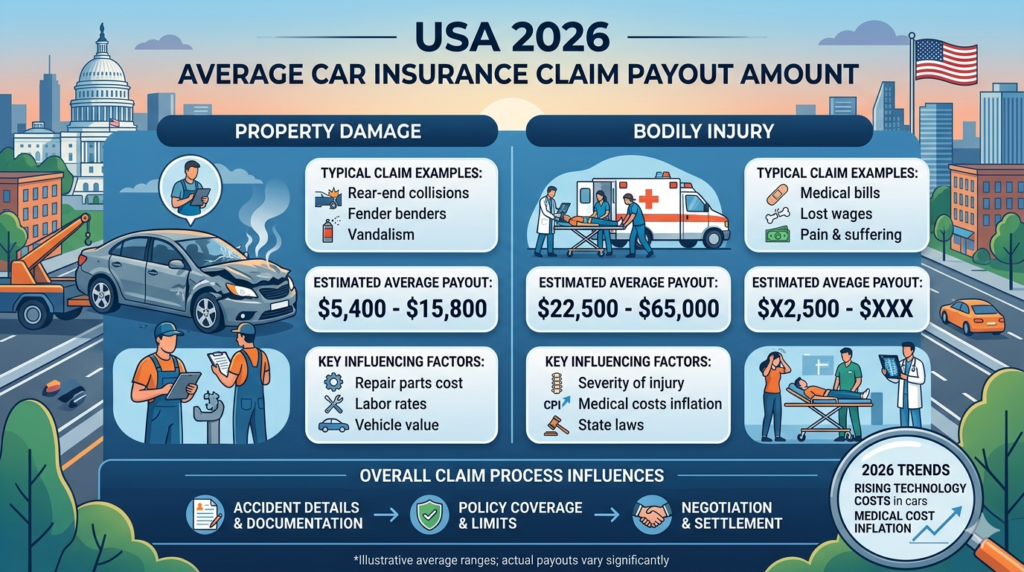
The average car insurance claim payout depends on the type of claim filed and the damages involved.
For example, property damage claims usually involve smaller payouts compared to bodily injury claims.
Typical payout ranges include:
| Claim Type | Average Payout |
|---|---|
| Property damage claim | $3,000 – $6,000 |
| Minor injury claim | $10,000 – $25,000 |
| Moderate injury claim | $25,000 – $100,000 |
| Severe injury claim | $100,000 – $500,000+ |
In serious accidents involving permanent injuries or fatalities, settlements may exceed $1 million.
Real Car Insurance Claim Payout Examples
Examining real case examples provides better insight into how compensation amounts vary.
Below are several insurance claim examples based on real accident scenarios.
| Accident Scenario | Claim Payout |
|---|---|
| Minor rear-end collision | $8,500 |
| Whiplash injury claim | $22,000 |
| Multi-vehicle accident | $75,000 |
| Broken leg injury accident | $160,000 |
| Traumatic brain injury accident | $650,000 |
| Fatal accident wrongful death claim | $1.2M |
These examples illustrate how compensation increases significantly when accidents cause serious injuries.
Why Car Insurance Payouts Can Vary So Much
Many accident victims are surprised to learn that two similar accidents can result in completely different settlement payouts.
Insurance companies evaluate several factors before determining compensation amounts.
Some of the most important factors include:
-
severity of injuries
-
medical expenses
-
liability evidence
-
insurance coverage limits
-
long-term disability impact
Even minor differences in these factors can dramatically affect the final settlement value.
Property Damage Claims Explained
Property damage claims are among the most common types of insurance claims filed after car accidents.
These claims cover the cost of repairing or replacing damaged property.
Examples include:
-
vehicle repair costs
-
damage to buildings
-
damage to fences or guardrails
Example payouts:
| Property Damage Type | Average Payout |
|---|---|
| Minor vehicle damage | $2,500 |
| Moderate vehicle repair | $5,000 |
| Total vehicle loss | $15,000+ |
Because property damage claims usually involve repair estimates, they are often resolved more quickly than injury claims.
Bodily Injury Insurance Claims
Bodily injury claims involve compensation for medical treatment and injury-related losses caused by the accident.
These claims often include compensation for:
-
hospital treatment
-
surgery costs
-
rehabilitation therapy
-
lost wages
Example injury claim payouts:
| Injury Severity | Typical Payout |
|---|---|
| Minor injuries | $15,000 |
| Moderate injuries | $60,000 |
| Severe injuries | $300,000+ |
In cases involving permanent disability, settlements may reach several hundred thousand dollars or more.
A Simple Insurance Claim Calculator Example
Insurance companies often estimate claim payouts using both economic and non-economic damages.
Example calculation:
| Damage Category | Amount |
|---|---|
| Vehicle damage | $9,000 |
| Medical bills | $18,000 |
| Lost wages | $7,000 |
| Pain and suffering | $35,000 |
Estimated payout: $69,000
Because every accident is different, actual claim payouts may vary significantly.
Car Accident Settlement Guide
https://claimjusticeusa.com/car-accident-settlement-guide-usa/
Personal Injury Settlement Guide
https://claimjusticeusa.com/personal-injury-settlement-guide-usa-2026/
Mesothelioma Compensation Claims Guide
https://claimjusticeusa.com/mesothelioma-compensation-claims-guide-usa-2026-average-payouts-lawsuits-trust-fund-claims/
Medical Malpractice Settlement Guide
https://claimjusticeusa.com/medical-malpractice-settlement-guide-usa-2026-average-payouts-lawsuit-process-real-examples/
Debt & Credit Settlement Guide
https://claimjusticeusa.com/debt-credit-settlement-2026-usa-how-to-legally-reduce-your-debt-by-up-to-70/
How Insurance Companies Actually Decide Claim Payout Amounts
Many drivers assume that insurance companies simply calculate the cost of repairs and medical bills before issuing a payout. In reality, the process is far more complex.
Insurance companies rely on detailed claim investigations, internal evaluation systems, and negotiation strategies to determine how much compensation they will offer.
Understanding how insurers evaluate claims can help accident victims avoid accepting settlement offers that may be lower than the true value of their case.
Step-by-Step Insurance Claim Process
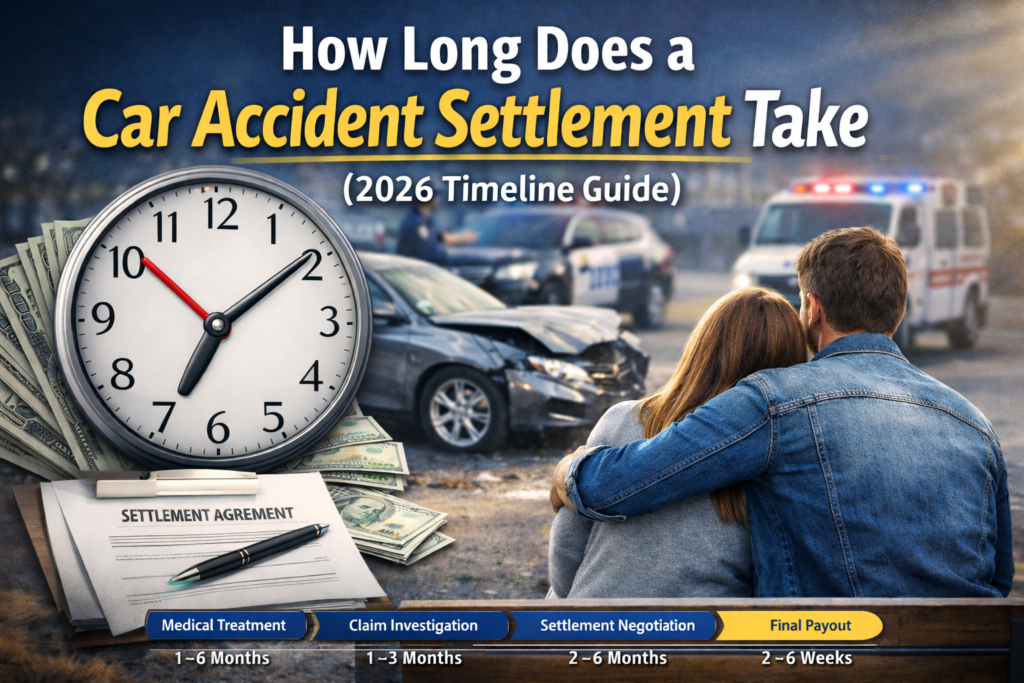
Most car accident insurance claims follow a predictable process from the moment the accident occurs until compensation is paid.
Typical claim process:
| Step | Description |
|---|---|
| Accident reported | Driver reports crash to insurer |
| Claim investigation | Insurance company investigates |
| Damage evaluation | Repair and medical costs reviewed |
| Settlement offer | Initial payout offer made |
| Negotiation | Settlement amount negotiated |
| Final payout | Compensation issued |
This process may take anywhere from a few weeks to several months depending on the complexity of the accident.
Why the First Insurance Offer Is Often Lower
Many accident victims are surprised when they receive their first insurance settlement offer.
Insurance companies often begin with lower offers for several reasons:
-
they expect negotiation
-
they may not yet have full medical documentation
-
they want to minimize claim payouts
For example:
| Claim Value | Initial Offer | Final Settlement |
|---|---|---|
| $80,000 claim | $35,000 | $72,000 |
| $150,000 claim | $60,000 | $135,000 |
Because of this negotiation process, many settlements end up being significantly higher than the initial offer.
Insurance Adjusters and Their Role
Insurance adjusters are responsible for evaluating claims and determining how much compensation should be paid.
Their job involves several responsibilities:
-
reviewing accident reports
-
examining vehicle damage
-
analyzing medical records
-
determining fault in the accident
Adjusters also consider the financial risk the insurance company faces if the case proceeds to court.
Because their goal is to protect the insurance company’s financial interests, adjusters often negotiate aggressively to reduce settlement amounts.
Liability and Fault in Car Insurance Claims
Another major factor affecting insurance claim payouts is who is responsible for the accident.
Insurance companies carefully investigate liability before approving compensation.
Common types of liability include:
| Liability Type | Description |
|---|---|
| Full liability | One driver fully responsible |
| Shared liability | Both drivers partially responsible |
| Disputed liability | Fault unclear |
In shared liability states, compensation may be reduced depending on the percentage of fault assigned to each driver.
Example:
If a driver is 20% responsible for an accident, their settlement may be reduced by 20%.
Medical Evidence and Insurance Payouts
Medical evidence is one of the most important factors affecting insurance settlements.
Insurance companies carefully review medical records to verify the severity of injuries.
Important medical evidence includes:
-
emergency room reports
-
diagnostic scans (X-rays, CT scans, MRI)
-
physician treatment notes
-
physical therapy documentation
Without proper medical documentation, insurance companies may reduce or deny injury claims.
Example medical costs:
| Treatment | Average Cost |
|---|---|
| Emergency room visit | $3,000 – $8,000 |
| Surgery | $20,000 – $100,000 |
| Physical therapy | $5,000 – $30,000 |
These costs often form the foundation of settlement negotiations.
When Insurance Claims Turn Into Lawsuits
While many claims are resolved directly with insurance companies, some cases eventually become personal injury lawsuits.
This usually occurs when:
-
the insurance company denies the claim
-
the settlement offer is too low
-
liability is strongly disputed
-
serious injuries are involved
In these situations, accident victims may hire attorneys and pursue compensation through the legal system.
Once lawyers become involved, insurance companies often increase settlement offers to avoid expensive court trials.
Claim Settlement Timeline
Insurance claim timelines vary depending on accident complexity.
Typical timelines include:
| Claim Type | Timeline |
|---|---|
| Minor property damage | 2–4 weeks |
| Injury claim | 2–6 months |
| Complex injury case | 6–12 months |
| Lawsuit settlement | 1–2 years |
Serious injury cases often require longer investigation periods before settlement negotiations begin.
Why Some Claims Take Longer
Several factors may delay insurance payouts.
Common reasons include:
-
ongoing medical treatment
-
disputes over liability
-
multiple drivers involved
-
large insurance policy limits
For example, insurance companies often wait until victims complete medical treatment before negotiating final settlements.
This allows them to accurately calculate total damages.
Claim Negotiation Strategy Used by Lawyers
Experienced accident lawyers often use specific strategies during insurance negotiations.
These strategies may include:
-
gathering detailed medical documentation
-
presenting expert witness reports
-
calculating long-term financial damages
-
demonstrating liability evidence
Because attorneys understand insurance negotiation tactics, they can often secure higher settlement payouts for clients.
Example lawyer-negotiated settlements:
| Injury Case | Insurance Offer | Final Settlement |
|---|---|---|
| Whiplash injury | $12,000 | $30,000 |
| Broken arm accident | $45,000 | $90,000 |
| Severe injury crash | $150,000 | $420,000 |
These examples demonstrate how legal representation can significantly increase compensation.
Insurance Claim Myths Many Drivers Believe
There are several common myths about car insurance claims that many drivers believe.
Myth 1: Insurance always pays full damages
In reality, insurers often negotiate settlement amounts.
Myth 2: Minor accidents always have small payouts
Even minor accidents can result in large settlements if injuries develop later.
Myth 3: Hiring a lawyer always leads to court
Most cases still settle without going to trial.
Understanding these misconceptions can help accident victims better navigate the claim process.
Comparing Small vs Large Car Insurance Claim Payouts
Not all car insurance claims are equal. Some claims are resolved with small payments for vehicle repairs, while others result in settlements worth hundreds of thousands of dollars.
The difference between small and large insurance payouts usually depends on the severity of injuries, liability evidence, and long-term financial damages caused by the accident.
Below is a comparison showing how accident severity can influence claim payouts.
| Accident Severity | Typical Claim Payout |
|---|---|
| Minor fender-bender | $2,000 – $8,000 |
| Moderate collision | $10,000 – $50,000 |
| Serious injury accident | $50,000 – $250,000 |
| Catastrophic injury accident | $250,000 – $1M+ |
As accidents become more severe, insurance companies must account for higher medical costs, lost income, and long-term rehabilitation expenses.
High Payout Car Insurance Claim Examples
Some accidents result in unusually high insurance settlements due to serious injuries or multiple parties being responsible.
Here are several examples of larger claim payouts.
| Accident Scenario | Insurance Payout |
|---|---|
| Multi-vehicle highway crash | $120,000 |
| Broken leg injury accident | $175,000 |
| Spinal injury collision | $350,000 |
| Traumatic brain injury crash | $800,000 |
| Fatal accident wrongful death claim | $1.4M |
These cases often involve extensive medical treatment and long-term financial losses, which significantly increase settlement values.
Why Severe Injuries Lead to Higher Claim Payouts
Insurance companies must consider the long-term impact of serious injuries when determining settlement values.
Examples of severe injuries include:
-
traumatic brain injuries
-
spinal cord damage
-
internal organ injuries
-
permanent disabilities
These injuries often require extensive medical treatment and long-term care.
Example lifetime injury costs:
| Injury Type | Estimated Lifetime Cost |
|---|---|
| Spinal cord injury | $1M – $3M |
| Traumatic brain injury | $500K – $2M |
| Severe burn injury | $300K – $1M |
Because these costs are extremely high, insurance settlements often increase accordingly.
Insurance Policy Limits and Their Impact
Insurance coverage limits also play a major role in determining claim payouts.
Each insurance policy has a maximum payout amount known as the coverage limit.
Example policy limits:
| Insurance Policy Type | Coverage Limit |
|---|---|
| Minimum liability policy | $25,000 |
| Standard coverage policy | $100,000 |
| High coverage policy | $500,000+ |
If accident damages exceed the insurance coverage limit, victims may need to pursue compensation through lawsuits or additional insurance policies.
How Multiple Insurance Policies Increase Payouts
In some accidents, more than one insurance policy may apply.
This commonly occurs in situations involving:
-
commercial vehicles
-
rideshare drivers
-
employer vehicles
-
multiple responsible drivers
Example payout scenario:
| Insurance Source | Compensation |
|---|---|
| Driver liability policy | $100,000 |
| Employer insurance policy | $300,000 |
| Underinsured motorist coverage | $150,000 |
Total compensation: $550,000
Because multiple insurance policies can contribute to settlements, total payouts may increase significantly.
The Role of Pain and Suffering Damages
In addition to financial losses, accident victims may receive compensation for pain and suffering.
Pain and suffering damages compensate victims for the physical and emotional impact of injuries.
Examples include:
-
chronic pain
-
emotional trauma
-
reduced quality of life
-
permanent disability
Lawyers often estimate pain and suffering damages using multipliers based on economic losses.
Example:
| Damage Type | Amount |
|---|---|
| Medical expenses | $60,000 |
| Lost wages | $20,000 |
| Economic damages total | $80,000 |
| Pain & suffering multiplier (3x) | $240,000 |
Estimated claim payout: $320,000
States With the Highest Car Insurance Claim Payouts
Some U.S. states tend to produce higher insurance settlements due to legal rules and accident frequency.
States with larger payouts often include:
| State | Settlement Trends |
|---|---|
| California | High injury settlements |
| New York | Large liability payouts |
| Florida | Frequent accident claims |
| Texas | High commercial vehicle settlements |
Legal regulations and insurance requirements in these states can influence claim outcomes.
When Insurance Companies Deny Claims
Sometimes insurance companies deny claims entirely.
Common reasons for denial include:
-
insufficient evidence
-
disputed liability
-
policy exclusions
-
late claim reporting
When claims are denied, victims may need to file appeals or pursue legal action.
Many denied claims are eventually resolved through negotiation or lawsuits.
Claim Disputes and Arbitration
Insurance disputes are often resolved through arbitration or mediation rather than court trials.
These processes allow both parties to negotiate settlement terms with the assistance of a neutral third party.
Advantages of arbitration include:
-
faster resolution
-
lower legal costs
-
less stress compared to court trials
Many insurance policies require arbitration before lawsuits can proceed.
Hidden Costs That Increase Claim Values
Several hidden costs may increase insurance claim payouts.
Examples include:
-
long-term physical therapy
-
mental health counseling
-
loss of future earning capacity
-
transportation costs for treatment
These additional damages are often overlooked by accident victims but can significantly increase settlement values.
Example Large Claim Calculation
Here is an example of how a large insurance claim payout may be calculated.
| Damage Category | Amount |
|---|---|
| Medical treatment | $120,000 |
| Future medical care | $80,000 |
| Lost wages | $60,000 |
| Pain and suffering | $300,000 |
Estimated claim payout: $560,000
Because every accident is different, insurance settlements can vary widely depending on the circumstances.
Car Insurance Claim Trends, Future Payout Predictions & Legal FAQs
How Car Insurance Claim Payouts Are Changing in 2026
Over the past decade, car insurance claim payouts in the United States have steadily increased. Several factors are responsible for this trend, including rising medical costs, more expensive vehicles, and stricter safety regulations.
Modern vehicles now contain advanced technology such as sensors, cameras, and automated safety systems. While these technologies improve safety, they also increase repair costs after accidents.
For example, replacing a bumper on a modern vehicle may require recalibrating multiple sensors and safety systems, significantly increasing repair expenses.
Below is a comparison showing how insurance claim payouts have changed over time.
| Year | Average Claim Payout |
|---|---|
| 2018 | $15,000 |
| 2020 | $18,500 |
| 2023 | $22,000 |
| 2026 (estimate) | $25,000 – $30,000 |
Because vehicle repair and medical costs continue to rise, insurance claim payouts are expected to increase in the coming years.
Why Modern Cars Lead to Higher Insurance Claims
Modern vehicles contain numerous advanced safety and technology features that can make repairs more expensive after accidents.
Examples of these technologies include:
-
lane departure warning systems
-
adaptive cruise control sensors
-
collision detection cameras
-
radar safety sensors
While these technologies help reduce accidents, repairing them after collisions can be costly.
Example repair comparison:
| Vehicle Type | Average Repair Cost |
|---|---|
| Older vehicle | $2,500 |
| Modern vehicle | $5,500 |
Because of these higher repair costs, insurance companies often pay larger property damage claims than in previous years.
The Impact of Medical Inflation on Insurance Claims
Another major reason claim payouts are increasing is the rising cost of healthcare.
Medical treatments related to car accident injuries can be extremely expensive, especially in cases involving surgery or long-term rehabilitation.
Typical accident-related medical costs include:
Medical cost reference:
National Institutes of Health
https://www.nih.gov
| Medical Treatment | Average Cost |
|---|---|
| Emergency room visit | $3,000 – $8,000 |
| Hospital stay | $10,000 – $30,000 |
| Surgery | $20,000 – $100,000 |
| Physical therapy | $5,000 – $30,000 |
Because insurance companies must cover these expenses when injuries occur, settlements often increase when medical treatment is required.
How Long It Takes to Receive an Insurance Claim Payout
The timeline for receiving compensation after a car accident varies depending on several factors.
Simple property damage claims may be resolved quickly, while complex injury cases may take much longer.
Typical claim timelines include:
| Claim Type | Average Timeline |
|---|---|
| Property damage claim | 2–4 weeks |
| Minor injury claim | 2–3 months |
| Serious injury claim | 6–12 months |
| Lawsuit settlement | 1–2 years |
The more complex the accident investigation becomes, the longer it may take to finalize the claim payout.
Steps Drivers Should Take After an Accident
Taking the correct steps immediately after an accident can significantly affect the success of an insurance claim.
Recommended actions include:
-
Contact emergency services if injuries occur
-
Document the accident scene with photos
-
Exchange information with other drivers
-
Report the accident to your insurance company
-
Seek medical attention for injuries
These steps help establish clear evidence of the accident, which is essential during claim investigations.
Tips to Maximize Your Insurance Claim Payout
Accident victims can take several steps to ensure they receive fair compensation.
Keep Detailed Medical Records
Medical documentation is one of the strongest pieces of evidence in injury claims.
Avoid Accepting the First Settlement Offer
Insurance companies often begin with lower offers before negotiations occur.
Document All Accident Expenses
This includes repair costs, medical bills, and transportation expenses related to treatment.
Consider Consulting an Accident Lawyer
Lawyers can help negotiate settlements and identify additional compensation sources.
Car Insurance Claim Settlement Calculator (Example)
To estimate potential claim payouts, insurance companies often evaluate multiple damage categories.
Example claim calculation:
| Damage Category | Amount |
|---|---|
| Vehicle repairs | $7,500 |
| Medical expenses | $18,000 |
| Lost wages | $6,500 |
| Pain and suffering | $30,000 |
Estimated settlement payout: $62,000
These estimates vary depending on the circumstances of each accident.
Frequently Asked Questions (FAQs)
1. What is the average car insurance claim payout in 2026?
Most claims range between $3,000 and $30,000, depending on property damage and injuries.
2. What types of accidents result in the highest payouts?
Accidents involving serious injuries, permanent disabilities, or fatalities typically produce the highest settlements.
3. How long does it take to receive an insurance settlement?
Minor claims may settle within weeks, while complex cases may take several months or longer.
4. Can insurance companies deny accident claims?
Yes. Claims may be denied if evidence is insufficient or policy exclusions apply.
5. Are car insurance settlements taxable?
Most compensation related to physical injuries is not taxable.
6. What damages are included in insurance claim payouts?
Typical damages include medical expenses, vehicle repairs, lost wages, and pain and suffering.
7. Do all accident cases require lawyers?
No. Many claims are resolved directly with insurance companies.
8. Can multiple insurance companies pay compensation?
Yes. In multi-vehicle accidents, multiple insurers may contribute to settlements.
9. What is the largest car accident settlement?
Some severe accident cases have resulted in settlements exceeding $1 million.
10. What evidence strengthens insurance claims?
Medical records, accident photos, witness statements, and police reports.
11. Do insurance companies negotiate settlement offers?
Yes. Initial offers are often negotiated before final agreements are reached.
12. Can settlements include future medical expenses?
Yes. Serious injury claims may include long-term treatment costs.
13. What happens if the insurance coverage limit is too low?
Victims may pursue compensation through lawsuits or additional insurance coverage.
14. Should drivers accept quick settlement offers?
It is often advisable to review offers carefully before accepting them.
15. When should accident victims contact legal professionals?
Immediately after serious accidents or when claims become disputed.
Conclusion
Car insurance claim payouts vary widely depending on accident severity, medical costs, and insurance coverage limits. While minor property damage claims may result in small settlements, accidents involving serious injuries can lead to much larger compensation payouts.
Understanding how insurance companies evaluate claims and calculate settlement amounts can help accident victims better navigate the claims process and protect their financial interests.
As vehicle technology, repair costs, and healthcare expenses continue to rise, the average car insurance claim payout is expected to increase in the coming years.
Drivers who understand the claims process and document accident evidence carefully are more likely to receive fair compensation for their losses.
Legal Disclaimer
This article is provided for informational purposes only and should not be considered legal advice. Car insurance laws and claim procedures vary depending on jurisdiction and specific circumstances. Individuals involved in accidents should consult qualified legal professionals for advice regarding their specific situations.