
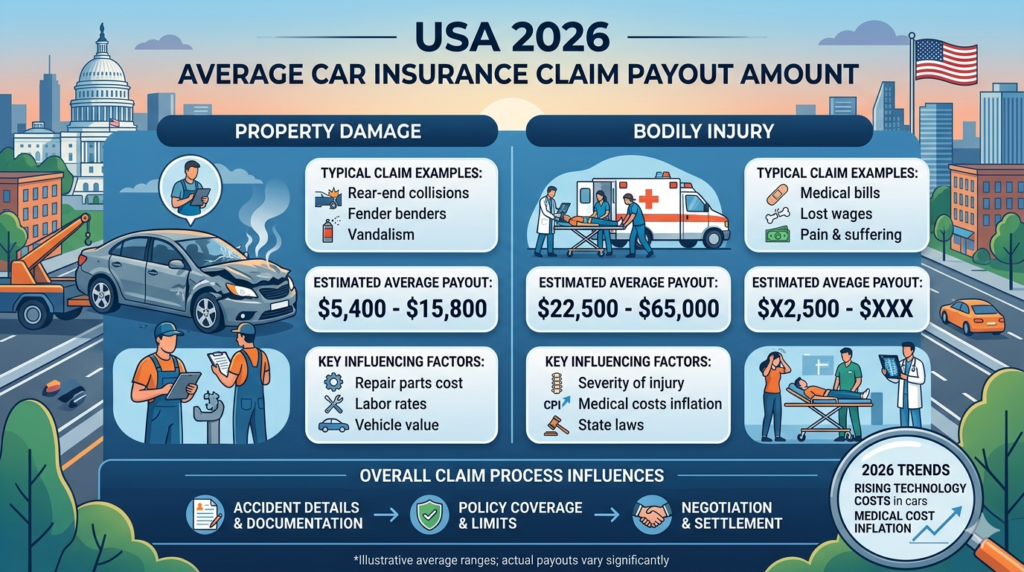
If you have been in a car accident, one of the first things you will want to know is the average car insurance claim payout for your type of claim. Payouts depend on your injuries, your state, the policy limits involved, and how well your damages are documented. This guide breaks down the average car insurance claim payout in the USA for 2026, shows real claim examples, explains how insurers calculate settlements, and gives you practical steps to maximize your compensation.
Millions of drivers file auto insurance claims every year in the United States, and payouts range from a few thousand dollars for minor fender-benders to six or seven figures for catastrophic injuries. Understanding the numbers before you negotiate puts you in a far stronger position than going in blind.
What Is the Average Car Insurance Claim Payout in 2026?
Industry data from the Insurance Information Institute and the National Highway Traffic Safety Administration shows that auto insurance payouts have risen steadily as vehicle repair costs and medical expenses increase. In 2026, the typical ranges are:
- Property damage only: $3,000 – $6,000 on average
- Minor injury claims: $10,000 – $25,000
- Moderate injury claims: $25,000 – $100,000
- Severe injury claims: $100,000 – $500,000+
These are national averages. Your actual payout may be higher or lower depending on your policy’s coverage limits, who was at fault, and how strong your medical evidence is. Averages also blend together small bumper claims and million-dollar injury cases, so use them as a starting point — not a promise.
Average Payouts by Claim Type
Not all claims are alike. The table below compares the main categories of auto insurance claims and their typical payout ranges in 2026:
| Claim Type | What It Covers | Typical Payout Range |
|---|---|---|
| Property damage | Vehicle repairs, replacement, other property | $3,000 – $6,000 |
| Collision | Damage to your own car regardless of fault | $4,000 – $10,000 |
| Comprehensive | Theft, vandalism, weather, animal strikes | $2,500 – $8,000 |
| Bodily injury liability | Medical bills, lost wages, pain and suffering | $26,000 – $100,000+ |
| Personal injury protection (PIP) | Medical costs regardless of fault | $8,000 – $20,000 |
| Uninsured/underinsured motorist | Losses when the other driver lacks coverage | $15,000 – $60,000 |
Real Car Insurance Claim Examples
Real-world examples illustrate how severity drives payout size. The following comparison is based on typical outcomes for common accident scenarios:
| Accident Scenario | Injuries & Damage | Typical Payout |
|---|---|---|
| Minor rear-end collision | Whiplash, bumper damage | $8,500 |
| Intersection T-bone crash | Concussion, shoulder injury | $42,000 |
| Highway multi-vehicle pileup | Broken bones, surgery required | $160,000 |
| Distracted-driving head-on crash | Traumatic brain injury, long rehab | $650,000 |
| Commercial truck accident | Spinal injury, permanent disability | $1,200,000 |
Notice the pattern: property damage alone produces modest payouts, while permanent injuries and lost earning capacity push settlements into six or seven figures. The biggest single jump happens when an injury becomes permanent or requires surgery.
Key Factors That Decide Your Payout
1. Liability and fault
Insurers investigate who caused the crash before approving any payout. Clear police reports, dashcam footage, and witness statements can make the difference between a full settlement and a denied claim. If you were partially at fault, many states reduce your payout by your percentage of fault. Learn more in our guide on what to do in the first 24 hours after a car accident to protect your claim from day one.
2. Insurance policy limits
Every policy has a maximum payout — the coverage limit. A minimum-liability policy may cap bodily injury at $25,000 per person, while standard policies often reach $100,000 or more. If your damages exceed the at-fault driver’s limits, you may need your own underinsured motorist coverage or a lawsuit to recover the rest.
3. Medical evidence
Medical records are the foundation of injury claims. Emergency room reports, imaging scans, surgical notes, and physical therapy records prove your injuries are real and accident-related. Gaps in treatment — waiting weeks to see a doctor — give insurers an excuse to argue your injuries were minor or unrelated.
4. State laws and deadlines
Statutes of limitations, no-fault rules, and damage caps vary widely by state. Filing deadlines are especially critical: miss yours and you may lose the right to claim anything. Check our guide on how long after a car accident you can file an injury claim for state-by-state deadlines.
5. Injury severity and permanence
Soft-tissue injuries settle for far less than fractures, surgeries, and permanent disabilities. Insurers pay more when an injury affects your ability to work, care for yourself, or enjoy life long-term.
How Insurance Companies Calculate Settlements
Adjusters typically start with your economic damages — medical bills, lost wages, and repair costs — then add non-economic damages like pain and suffering using a multiplier, usually 1.5x to 5x your economic damages depending on severity.
| Damage Category | Amount |
|---|---|
| Vehicle repairs | $8,000 |
| Medical expenses | $18,000 |
| Lost wages | $7,000 |
| Economic damages total | $33,000 |
| Pain and suffering (2.5x multiplier) | $82,500 |
| Estimated claim payout | $115,500 |
Insurers also run claims through software like Colossus that weighs medical codes, treatment duration, and attorney involvement. Strong documentation and consistent treatment tend to raise the multiplier; inconsistent care lowers it. For deeper strategy, see our max payout guide for car accident insurance settlements.
Why the First Offer Is Usually Low
The first settlement offer is almost never the best offer. Adjusters often start low because they expect negotiation, because your full medical costs are not yet known, and because their job is to protect the insurer’s bottom line. Data from negotiated settlements shows final payouts commonly land 40–100% above initial offers.
Never accept a quick offer before you know the full extent of your injuries. Some injuries — including whiplash, concussions, and herniated discs — take weeks to fully appear. Settling early can leave you paying future medical bills out of pocket.
5 Steps to Maximize Your Car Insurance Claim
- Get medical care immediately — even if you feel fine — and follow every treatment plan.
- Document everything: photos of the scene, damage, injuries, police reports, and all bills and receipts.
- Keep a pain and impact journal recording how injuries affect your daily life and work.
- Do not give recorded statements without preparation, and avoid posting about the accident on social media.
- Negotiate or get help: reject low offers in writing with evidence, or consult an attorney if the insurer will not budge.
When Should You Hire a Car Accident Lawyer?
Not every claim needs a lawyer, but legal help typically pays for itself in serious cases. Consider hiring an attorney if:
- Your injuries required surgery, hospitalization, or long-term treatment
- Liability is disputed or the insurer denies your claim
- The settlement offer does not cover your medical bills and lost wages
- A commercial vehicle, rideshare, or government vehicle was involved
Most personal injury attorneys work on contingency — no upfront fee, paid only if you win. If your claim was already denied, read our guide on what to do when your car accident claim is denied.
Frequently Asked Questions
1. What is the average car insurance claim payout in the USA?
In 2026, property damage claims average $3,000–$6,000, minor injury claims $10,000–$25,000, moderate injury claims $25,000–$100,000, and severe injury claims $100,000–$500,000 or more.
2. How long does it take to receive an insurance payout?
Simple property damage claims often settle in 2–4 weeks. Injury claims take 2–6 months on average; complex cases with disputed liability or serious injuries can take a year or longer.
3. Can insurance companies deny my car accident claim?
Yes. Common denial reasons include insufficient evidence, disputed fault, policy exclusions, and late reporting. Many denied claims are later resolved through appeals, complaints to the state insurance department, or legal action.
4. Are car insurance settlements taxable?
Generally, compensation for physical injuries is not taxable under federal law. However, portions covering lost wages, interest, or punitive damages may be taxable. Consult a tax professional for your situation.
5. What damages can I claim after a car accident?
You can typically claim medical expenses, vehicle repair or replacement, lost wages, future medical costs, pain and suffering, and in serious cases, loss of earning capacity and permanent disability compensation.
6. Do I need a lawyer for a minor accident claim?
Usually not for property-damage-only claims with clear fault. But if injuries are involved — or the insurer is lowballing or denying — a free consultation with an attorney is worthwhile.
7. How is pain and suffering calculated?
Insurers typically multiply your economic damages (medical bills, lost wages) by 1.5x to 5x depending on injury severity, permanence, and impact on your life.
8. What if the other driver has no insurance?
Your own uninsured/underinsured motorist coverage can cover your losses. If you lack that coverage, you may need to sue the driver personally, though collecting can be difficult.
9. Should I accept the first settlement offer?
Usually not. First offers are often 40–100% below the final negotiated settlement. Review the offer against your total documented damages before accepting.
10. Can multiple insurance policies pay on one claim?
Yes. In accidents involving commercial vehicles, rideshare drivers, employers, or multiple at-fault parties, several policies can stack — significantly increasing total compensation.
The Bottom Line
The average car insurance claim payout in 2026 ranges from a few thousand dollars for minor property damage to six or seven figures for catastrophic injuries. The biggest factors within your control are prompt medical care, thorough documentation, and patience during negotiation. Know the numbers, understand how insurers calculate offers, and never settle before you know the full cost of your injuries.
Legal Disclaimer: This article is for informational purposes only and does not constitute legal advice. Insurance laws and payout rules vary by state. For guidance about your specific claim, consult a licensed attorney in your jurisdiction.
