Introduction: How to Maximize Your Car Accident Settlement in the USA ,Why Most Accident Victims Lose Thousands of Dollars
Every year in the United States, thousands of car accident victims receive settlements. Some walk away with fair compensation, while others unknowingly accept far less than they deserve.
The difference is not luck. It is knowledge.
Insurance companies are highly trained to minimize payouts. Their goal is simple: close your case quickly and pay you as little as possible. If you do not understand how settlements work, you are at a disadvantage from the beginning.
On the other hand, individuals who understand the process, document their case properly, and use the right strategies often receive significantly higher settlements.
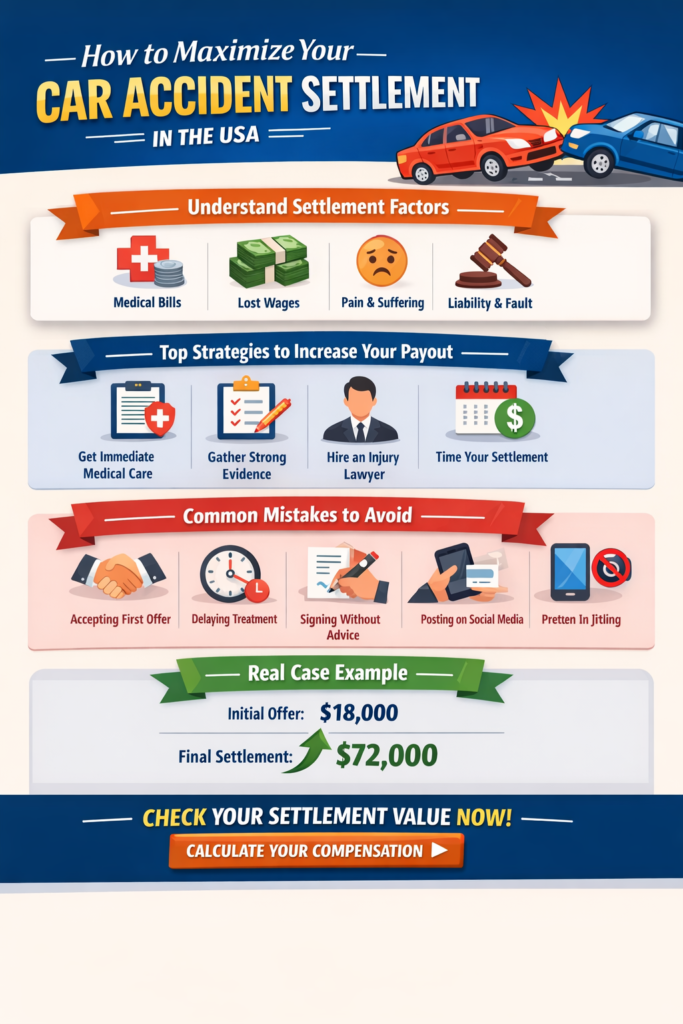
What Determines a Car Accident Settlement in the USA
1. Medical Expenses (Economic Damages)
Medical costs form the foundation of your claim. These include:
- Emergency room visits
- Hospitalization
- Surgery costs
- Physical therapy
- Prescription medications
- Future medical expenses
The higher your documented medical expenses, the stronger your claim becomes.
2. Lost Income and Earning Capacity
If your injuries prevented you from working, you can claim:
- Lost wages
- Missed work opportunities
- Reduced earning capacity
- Future income loss
3. Pain and Suffering (Non-Economic Damages)
This is often the largest portion of a settlement.
It includes:
- Physical pain
- Emotional distress
- Anxiety and trauma
- Loss of enjoyment of life
In many cases, pain and suffering accounts for 50% or more of total compensation.
4. Liability and Fault Percentage
The state laws determine how fault affects your payout:
- 100% not at fault → full compensation
- Partially at fault → reduced payout
How Settlement Amount Is Calculated
A commonly used method:
Settlement = (Medical Bills + Lost Wages) + Multiplier × Pain & Suffering
Example Calculation
| Factor | Amount |
|---|---|
| Medical Bills | $20,000 |
| Lost Wages | $10,000 |
| Multiplier | 3x |
👉 Estimated Settlement: $120,000
Top 5 Strategies to Maximize Your Settlement
1. Seek Immediate Medical Attention
Delaying treatment is one of the biggest mistakes.
Insurance companies may argue your injuries are not serious if there is a gap in treatment.
Best Practice:
- Visit a doctor immediately
- Follow treatment plans
- Keep all records
2. Gather Strong Evidence
Evidence directly impacts your settlement.
Important Evidence Includes:
- Accident photos
- Vehicle damage
- Injury photos
- Police reports
- Witness statements
3. Never Accept the First Offer
Insurance companies usually start with a low offer.
Why?
Because most people accept it without negotiation.
Always:
- Review carefully
- Compare damages
- Negotiate
4. Hire a Personal Injury Lawyer
Studies consistently show:
| Scenario | Average Outcome |
|---|---|
| Without Lawyer | Lower settlement |
| With Lawyer | 2x–3x higher payout |
Most lawyers work on contingency, meaning you pay nothing unless you win.
5. Avoid Social Media Activity
Insurance companies monitor social media.
Posting photos or updates can be used against your claim.
Real Case Example
A victim in Texas initially received an offer of $18,000.
After evaluating the claim properly and consulting a legal expert, the final settlement reached $72,000.
This highlights the importance of understanding your claim value before accepting any offer.
Common Insurance Company Tactics
1. Quick Settlement Offers
Designed to close your case before full damages are known.
2. Delayed Processing
Used to pressure victims into accepting lower offers.
3. Recorded Statements
Often used to find inconsistencies in your claim.
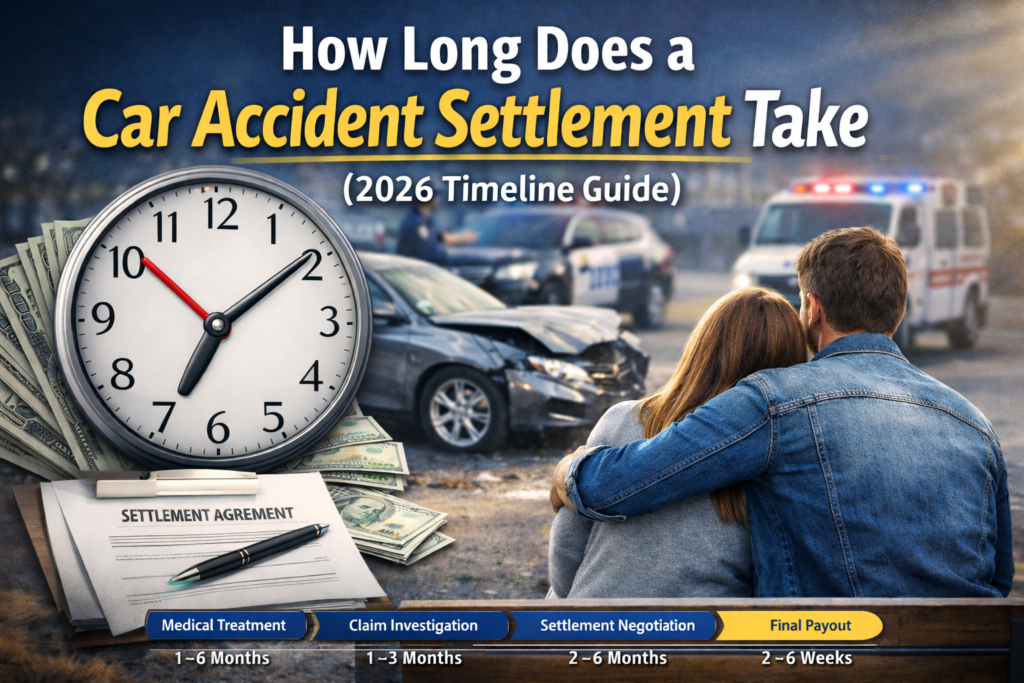
Settlement Timeline in the USA
| Stage | Duration |
|---|---|
| Medical Treatment | 1–6 months |
| Claim Filing | 2–4 weeks |
| Negotiation | 1–3 months |
| Final Settlement | 3–12 months |
States with Higher Settlement Averages
- California
- New York
- Texas
- Florida
These states often have higher payouts due to stronger legal frameworks.
- Average Car Accident Settlement in California
- Pain and Suffering Compensation Guide
- Do You Need a Lawyer After an Accident
External References
- National Highway Traffic Safety Administration (NHTSA)
- Insurance Information Institute (III)
You may also read:
- Average Car Accident Settlement in California
- Pain and Suffering Compensation Guide
- Personal Injury Claim Process Explained
What You Should Do Immediately After an Accident
- Seek medical attention
- Report the accident
- Collect evidence
- Avoid admitting fault
- Consult legal guidance
Advanced Strategies to Increase Your Settlement Amount
Most people follow basic steps. But high payouts milte hain advanced strategies se.
1. Understand the Multiplier Method Deeply
Insurance companies pain and suffering calculate karte hain using a multiplier.
Multiplier Range
| Injury Severity | Multiplier |
|---|---|
| Minor Injury | 1.5x – 2x |
| Moderate Injury | 2x – 3.5x |
| Severe Injury | 4x – 5x |
How to Increase Your Multiplier
- Strong medical documentation
- Long recovery time
- Permanent damage proof
- Emotional distress evidence
👉 Jitna strong case → utna high multiplier 💰
2. Use the “Demand Letter Strategy”
Demand letter ek powerful tool hai jo lawyers use karte hain.
What It Includes
- Detailed accident description
- Medical expenses breakdown
- Emotional suffering explanation
- Total compensation demand
Why It Works
Insurance companies structured claims ko seriously lete hain.
👉 Random claim = low offer
👉 Professional demand = higher negotiation
3. Timing Your Settlement Matters
Wrong Timing
- Immediately after accident
- Before treatment completion
Right Timing
- After full recovery
- When future damages clear ho
👉 Timing decide karta hai final payout 💰
4. Leverage Comparative Fault Laws
USA me har state ka rule different hota hai.
Types of Fault Systems
| Type | Explanation |
|---|---|
| Pure Comparative | Even 1% fault pe bhi claim milta hai |
| Modified Comparative | 50% ke baad claim reduce ya cancel |
| Contributory Negligence | Slight fault = no claim |
👉 Example:
If you are 20% at fault:
👉 $100,000 claim → $80,000 payout
5. Negotiate Like a Pro
Negotiation is where real money is made.
Effective Negotiation Techniques
- Never reveal your minimum expectation
- Always counteroffer
- Use evidence as leverage
- Stay patient
Negotiation Flow
| Step | Action |
|---|---|
| Step 1 | Insurance initial low offer |
| Step 2 | You reject politely |
| Step 3 | Counter with higher demand |
| Step 4 | Multiple rounds |
| Step 5 | Final settlement |
👉 Sabse bada rule:
First offer kabhi accept mat karo
Comparison: Early vs Strategic Settlement
| Factor | Early Settlement | Strategic Settlement |
|---|---|---|
| Speed | Fast | Moderate |
| Amount | Low | High 💰 |
| Risk | High | Controlled |
| Outcome | Underpaid | Maximum payout |
Psychology Behind Insurance Companies
Insurance companies sirf numbers nahi, psychology use karti hain.
1. Pressure Technique
“Offer valid for limited time”
👉 Goal: Fast Desicon
2. Lowball Anchoring
“Start with low offer”
👉 Taaki final bhi low rahe
3. Confusion Strategy
“Get confuse with Legal terms”
👉 Smart move:
Stay calm, informed, and strategic
Hidden Factors That Increase Settlement Value
1. Consistency in Medical Treatment
Gaps in treatment = weak case
2. Specialist Reports
- Orthopedic specialist
- Neurologist
- Therapist
3. Expert Witness
In Severe cases :
✔ Expert testimony
✔ Accident reconstruction
👉 This will increase Payout 💰
High-Value Damages Most People Ignore
1. Future Medical Costs
- Long-term therapy
- Surgeries
- Medication
2. Emotional & Psychological Damage
- PTSD
- Anxiety
- Depression
3. Loss of Enjoyment of Life
Daily activities impact counting
👉 Include all this → settlement increase
When to Hire a Lawyer (Critical Decision Point)
Hire Immediately If:
- Serious injury
- High medical bills
- Disputed fault
- Insurance denying claim
You May Handle Yourself If:
- Minor injury
- Low damages
- Clear liability
👉 But remember:
Lawyer = higher payout in most cases
Red Flags That Reduce Your Settlement
Avoid These Mistakes
❌ Giving recorded statements
❌ Signing documents without review
❌ Ignoring medical advice
❌ Accepting first offer
❌ Posting online
Real Settlement Comparison Case
| Scenario | Settlement |
|---|---|
| No strategy | $20,000 |
| With evidence | $45,000 |
| With lawyer + strategy | $85,000 💰 |
Real Case Study: Turning a Low Offer into a High Settlement
A 32-year-old accident victim from Texas was involved in what appeared to be a minor collision. The insurance company quickly offered a settlement of $18,000.
At first glance, the offer seemed reasonable. Many people in similar situations accept such offers without questioning them.
However, instead of accepting immediately, the victim took additional steps. He evaluated the actual value of his claim, documented all damages thoroughly, and consulted a legal professional.
The final settlement reached $72,000.
The outcome was not based on luck. It was based on understanding the true value of the claim and using the right approach.
Most people accept what is offered. Those who calculate, document, and negotiate receive significantly higher compensation.
👉 Check your estimated settlement now: [Add Your Affiliate Link]
Why Most Accident Victims Accept Low Settlements
Many claims are undervalued not because they lack merit, but because of human behavior.
1. Fear of a Long Process
Victims often want to close the case quickly and move on. This leads to accepting early offers without understanding long-term consequences.
2. Lack of Information
Many individuals are unaware of:
- What damages they can claim
- How settlement amounts are calculated
- Their legal rights
3. Pressure from Insurance Companies
Insurance adjusters are trained to:
- Create urgency
- Present offers as “final”
- Encourage quick decisions
4. Misjudging Injury Severity
Some injuries worsen over time. Settling early prevents you from claiming future medical costs.
Psychological Triggers Used by Insurance Companies
Understanding these tactics helps you avoid costly mistakes.
Urgency Trigger
“This offer is only available for a limited time.”
This is designed to force quick decisions without proper evaluation.
Anchoring Effect
A low initial offer sets a baseline, making slightly higher offers seem reasonable.
Information Overload
Complex legal language is used to confuse claimants and discourage negotiation.
How to Strengthen Your Claim Strategically
1. Maintain a Daily Impact Record
Keep a simple daily record of how the injury affects your life.
Include:
- Pain levels
- Physical limitations
- Emotional impact
- Missed activities
This creates a strong narrative for pain and suffering damages.
2. Follow All Medical Advice
Consistency in treatment demonstrates seriousness.
Missing appointments or ignoring recommendations can weaken your claim.
3. Include Future Damages
Many claims ignore long-term effects.
These may include:
- Future surgeries
- Ongoing therapy
- Reduced work capacity
Including these increases total compensation significantly.
Settlement Value by Injury Severity
Minor Injuries
- Soft tissue injuries
- Minor bruises
Estimated range: $5,000 – $15,000
Moderate Injuries
- Fractures
- Extended recovery
Estimated range: $15,000 – $50,000
Severe Injuries
- Permanent disability
- Long-term medical care
Estimated range: $50,000 – $200,000+
What Increases Your Settlement Value
- Immediate medical treatment
- Strong documentation
- Clear proof of liability
- Professional legal representation
- Consistent medical records
What Reduces Your Settlement Value
- Delayed treatment
- Incomplete documentation
- Accepting early offers
- Social media activity
- Lack of legal guidance
Comparison: Knowledge vs No Knowledge
| Situation | Outcome |
|---|---|
| No understanding of claim value | Low settlement |
| Basic understanding | Moderate settlement |
| Full strategy + negotiation | High settlement |
Behavior Patterns of High-Value Claims
High-value claims follow consistent patterns:
- Detailed documentation
- Professional communication
- Strategic timing
- Proper negotiation
- Patience during the process
Behavior Patterns of Low-Value Claims
Low-value claims often involve:
- Rushed decisions
- Lack of documentation
- Emotional reactions
- Acceptance of first offer
- Poor understanding of rights
Key Decision Point Before Accepting Any Offer
Before accepting a settlement, ask yourself:
- Have all medical treatments been completed?
- Are future expenses included?
- Is the offer aligned with actual damages?
- Have you compared similar cases?
If the answer to any of these is no, it is too early to settle.
Frequently Asked Questions
1. How much is the average car accident settlement in the USA?
The average settlement varies widely, but most cases fall between $10,000 and $100,000 depending on injury severity, liability, and documentation.
2. What factors increase my settlement amount the most?
Medical expenses, strong evidence, pain and suffering, and legal representation have the biggest impact on settlement value.
3. Should I accept the first settlement offer?
No. Initial offers are typically lower than the actual value of your claim. Negotiation is essential.
4. How long does a car accident settlement take?
Most cases take between 3 to 12 months, depending on the complexity of injuries and negotiations.
5. Do I need a lawyer for my claim?
While not mandatory, hiring a lawyer often results in significantly higher compensation.
6. What is pain and suffering in a settlement?
It includes physical pain, emotional distress, and reduced quality of life caused by the accident.
7. How is pain and suffering calculated?
It is usually calculated using a multiplier method based on the severity of injuries.
8. Can I claim future medical expenses?
Yes. Future treatments, therapy, and long-term care can be included in your claim.
9. What happens if I am partially at fault?
Your compensation may be reduced based on your percentage of fault, depending on state laws.
10. What should I do immediately after an accident?
Seek medical attention, collect evidence, report the accident, and avoid admitting fault.
11. Can social media affect my settlement?
Yes. Insurance companies may use your posts to challenge your injury claims.
12. What documents are required for a strong claim?
Medical records, bills, accident reports, photos, and witness statements.
13. How do insurance companies calculate settlement offers?
They evaluate medical costs, liability, damages, and risk of litigation.
14. Can I negotiate my settlement myself?
Yes, but professional negotiation often leads to better outcomes.
15. What is the biggest mistake accident victims make?
Accepting a quick settlement without understanding the full value of their claim.
16. Is there a time limit to file a claim?
Yes. Each state has a statute of limitations, typically between 1 to 3 years.
17. Can my settlement be taxed?
Most personal injury settlements are not taxable, but certain portions may be subject to tax depending on the case.
Final Comparison: Smart vs Uninformed Claim Approach
| Factor | Uninformed Approach | Strategic Approach |
|---|---|---|
| Settlement Timing | Early | Optimized |
| Documentation | Weak | Strong |
| Negotiation | None | Professional |
| Outcome | Lower payout | Higher payout |
Final Action Checklist
Before accepting any settlement, make sure you:
- Complete your medical treatment
- Document all expenses and damages
- Calculate your full claim value
- Understand your legal rights
- Consider professional guidance
Conclusion
Maximizing your car accident settlement is not about luck. It is about understanding the process, documenting your damages, and making informed decisions.
Insurance companies are structured to minimize payouts, but with the right strategy, you can protect your claim and significantly increase your compensation.
The key is to avoid rushing, gather strong evidence, and evaluate your case properly before making any decision.
Even a small improvement in your approach can result in thousands of dollars in additional compensation.
Legal Disclaimer
This content is for informational purposes only and should not be considered legal advice. Settlement amounts vary based on individual circumstances, state laws, and case details. For accurate legal guidance, consult a licensed attorney in your state.